
Net Promoter Score (NPS) has become one of the most widely used customer experience metrics in the world. From startups to Fortune 500 companies, businesses rely on NPS to measure customer loyalty, predict retention, and identify areas for improvement.
However, simply sending an NPS survey doesn’t guarantee meaningful insights.
Many organizations unknowingly make mistakes that reduce response rates, distort results, or prevent them from taking meaningful action. As a result, they end up collecting numbers instead of valuable customer intelligence.
If you want your NPS program to genuinely improve customer experience, it’s important to avoid these common pitfalls.
What is an NPS Survey?
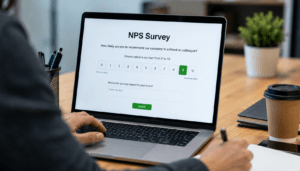
An NPS (Net Promoter Score) survey measures customer loyalty by asking one simple question:
“How likely are you to recommend our company, product, or service to a friend or colleague?”
Customers respond on a scale of 0 to 10.
Responses are grouped into three categories:
- Promoters (9–10): Loyal customers who actively recommend your business.
- Passives (7–8): Satisfied customers who may switch to competitors.
- Detractors (0–6): Unhappy customers who may discourage others from choosing your business.
While the score itself is valuable, the real insights come from understanding why customers gave that rating.
Why NPS Matters
When used correctly, NPS helps businesses:
- Measure customer loyalty
- Predict customer retention
- Identify dissatisfied customers
- Improve customer experience
- Reduce churn
- Strengthen brand advocacy
But only if the survey is designed and managed effectively.
Mistake 1: Focusing Only on the Score
One of the biggest mistakes businesses make is celebrating—or worrying about—the NPS number without understanding the reasons behind it.
For example:
An NPS of 52 tells you what customers think.
It doesn’t tell you why they feel that way.
Always include an open-ended follow-up question such as:
- What influenced your score?
- What could we improve?
- What did you like most about your experience?
Customer comments provide the actionable insights behind the score.
Mistake 2: Surveying at the Wrong Time
Timing has a significant impact on response quality.
Sending an NPS survey too early means customers haven’t experienced enough of your product or service.
Sending it too late means important details may be forgotten.
The best times include:
- Shortly after onboarding
- After a completed purchase
- Following customer support interactions
- After service delivery
- At regular relationship milestones
Choosing the right moment leads to more accurate feedback.

Mistake 3: Asking Too Many Questions
NPS surveys work because they’re simple.
Many organizations reduce completion rates by adding:
- Lengthy questionnaires
- Multiple rating scales
- Irrelevant questions
Customers are more likely to respond when surveys are short and focused.
Keep additional questions limited to what is truly necessary.
Mistake 4: Ignoring Open-Ended Feedback
The comments customers leave are often more valuable than the score itself.
For example, several customers may mention:
- Slow customer support
- Website usability issues
- Product quality concerns
- Billing confusion
Ignoring these comments means missing opportunities for meaningful improvement.
Mistake 5: Surveying Everyone Too Frequently
Over-surveying leads to survey fatigue.
Customers who receive frequent requests eventually stop responding.
Instead:
- Space surveys appropriately.
- Avoid repeated requests within short timeframes.
- Segment your audience.
Respecting customers’ time improves participation rates.

Mistake 6: Failing to Close the Feedback Loop
Collecting feedback without taking action frustrates customers.
If customers repeatedly share concerns but never see improvements, they lose confidence in the feedback process.
Close the loop by:
- Acknowledging feedback
- Thanking respondents
- Resolving issues
- Communicating improvements
Customers appreciate knowing their opinions made a difference.
Mistake 7: Ignoring Detractors
Some businesses focus only on Promoters.
That’s a mistake.
Detractors often provide the most valuable insights because they highlight:
- Service failures
- Product gaps
- Operational issues
- Customer frustrations
Responding quickly to dissatisfied customers can often prevent churn.
Mistake 8: Treating Every Customer the Same
Different customer groups have different expectations.
A first-time customer and a long-term client may evaluate your business differently.
Segment NPS responses based on factors such as:
- Customer lifecycle stage
- Product purchased
- Industry
- Geography
- Customer value
Segmentation leads to more meaningful insights.
Mistake 9: Using NPS as the Only CX Metric
NPS is powerful—but it shouldn’t be your only customer experience metric.
Combine it with:
- Customer Satisfaction Score (CSAT)
- Customer Effort Score (CES)
- Customer reviews
- Support analytics
- Voice of Customer (VoC) programs
Together, these metrics provide a more complete picture of customer experience.
Mistake 10: Not Sharing Insights Across Teams
Customer feedback shouldn’t remain within one department.
NPS insights can benefit:
- Customer support
- Product development
- Sales
- Marketing
- Leadership
- Operations
When every team understands customer feedback, organizations make better decisions.

Mistake 11: Ignoring Trends Over Time
A single NPS survey provides only a snapshot.
Real value comes from tracking trends.
Monitor:
- Monthly changes
- Quarterly improvements
- Customer segments
- Product-specific feedback
- Regional differences
Long-term analysis reveals whether customer experience initiatives are working.
Mistake 12: Not Using Technology to Analyze Feedback
Large organizations receive thousands of survey responses.
Manually reviewing every comment isn’t practical.
Modern customer experience platforms use Artificial Intelligence to:
- Detect customer sentiment
- Identify recurring themes
- Predict churn
- Prioritize urgent issues
- Generate actionable insights
Technology transforms raw feedback into strategic business intelligence.
Best Practices for Running Successful NPS Surveys
To maximize the value of your NPS program:
- Keep surveys short.
- Ask one meaningful follow-up question.
- Survey customers at the right time.
- Analyze comments, not just scores.
- Respond quickly to detractors.
- Share insights across departments.
- Monitor trends continuously.
- Act on customer feedback.
Most importantly, remember that NPS is the beginning of a conversation—not the end.
Why Acting on Feedback Matters More Than Measuring It
Many organizations spend months improving their NPS score.
The better goal is improving the customer experience.
When businesses consistently solve customer problems:
- Satisfaction increases.
- Loyalty improves.
- Churn decreases.
- Advocacy grows.
Ironically, the NPS score often improves naturally as a result.
Focus on creating better experiences—not chasing better numbers.
Final Thoughts
Net Promoter Score remains one of the most valuable customer experience metrics available—but only when used thoughtfully.
Avoiding common mistakes like over-surveying, ignoring comments, focusing only on scores, or failing to act on feedback can dramatically improve the quality of insights your business receives.
The most successful organizations don’t treat NPS as a reporting metric. They use it as a strategic tool for understanding customers, improving experiences, and building lasting relationships.
Remember, the goal isn’t simply to collect feedback—it’s to use that feedback to create customers who are happy to recommend your business.
Transform Your NPS Program with PiHappiness
At PiHappiness, we help businesses go beyond collecting scores. Our customer experience experts design intelligent Voice of Customer (VoC) programs, optimize NPS surveys, leverage AI-powered feedback analytics, and transform customer insights into measurable business growth.
Whether you’re launching your first NPS initiative or looking to improve an existing program, PiHappiness provides the tools, expertise, and actionable insights needed to build stronger customer relationships and improve loyalty.
Visit: www.pihappiness.com