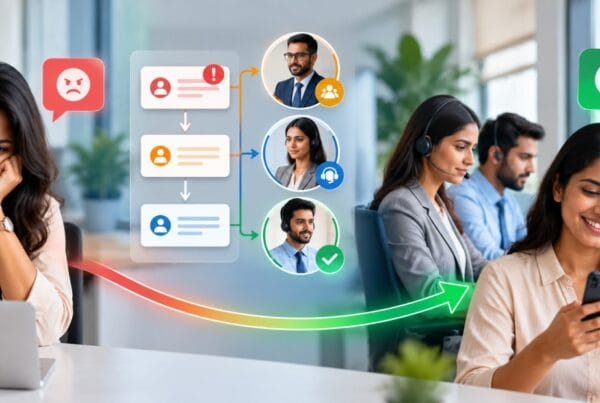
Customer expectations have never been static. A customer who receives fast, personalized, and seamless service from one brand often expects the same experience from every other organization they interact with. When businesses fail to meet those expectations, dissatisfaction grows, loyalty declines, and customers begin looking elsewhere.
This is where the challenge of customer expectations vs. customer experience becomes critical. Many organizations believe they are delivering good experiences, yet customer feedback tells a different story. The difference between what customers expect and what they actually experience is known as the customer experience gap.
Closing that gap requires more than intuition. It demands a structured approach to listening to customers, analyzing feedback, measuring experience quality, and acting on insights across the customer journey.
In this article, we’ll explore what causes customer experience gaps, how to identify them, the metrics that matter, and practical strategies that help organizations improve customer satisfaction, loyalty, and long-term relationships.
What Is the Customer Experience Gap?

The customer experience gap is the difference between:
- What customers expect from your organization
- What they actually experience during interactions
Expectations are shaped by previous experiences, competitor offerings, online reviews, marketing messages, industry standards, and personal preferences.
When experiences consistently fall short of expectations, organizations often face:
- Lower customer satisfaction
- Negative reviews
- Increased customer churn
- Reduced customer loyalty
- Higher service and support costs
A Simple Example
A hotel advertises a fast digital check-in process. Guests expect a smooth arrival experience.
However, when they arrive:
- The system is unavailable
- Staff require manual processing
- Wait times increase
The hotel promised convenience, but the actual experience created frustration. That gap directly impacts satisfaction and future booking decisions.
Why Bridging the Gap Matters
Customer expectations continue to evolve as digital experiences become more personalized and convenient across industries.
Organizations that understand and respond to customer expectations are better positioned to:
- Improve customer satisfaction
- Strengthen loyalty
- Increase customer retention
- Reduce service friction
- Build stronger brand trust
- Create more customer-centric operations
More importantly, closing experience gaps helps businesses allocate resources toward the improvements customers actually value rather than assumptions made internally.
Common Causes of the Customer Experience Gap

Understanding the root causes is the first step toward improvement.
- Misaligned Marketing and Reality
When marketing promises exceed operational capabilities, customers feel disappointed.
Examples include:
- Overstated service speed
- Unrealistic delivery expectations
- Promised personalization that doesn’t exist
- Promotional offers with hidden limitations
Customer expectations management starts with setting realistic expectations.
- Siloed Customer Data
Many organizations collect customer information across multiple systems that do not communicate effectively.
As a result:
- Customers repeat information
- Service teams lack context
- Experiences become inconsistent
- Lack of Customer Feedback Visibility
Feedback collected but not acted upon creates blind spots.
Many businesses gather survey responses but fail to:
- Identify trends
- Share insights with stakeholders
- Prioritize improvements
- Inconsistent Experiences Across Channels
Customers expect continuity whether they interact through:
- Websites
- Mobile apps
- Call centers
- Physical branches
- Social media
When experiences differ significantly between touchpoints, trust declines.
- Poor Internal Communication
Customer-facing employees often understand customer frustrations before leadership does.
Without effective feedback loops, recurring issues remain unresolved.
How to Identify the Customer Experience Gap
Organizations cannot improve what they do not measure.
A combination of customer feedback, journey analysis, and experience metrics helps reveal the gap.
Customer Expectations vs. Customer Experience: What to Measure
| Area | Questions to Ask |
| Expectations | What do customers expect before interacting with us? |
| Experience | What actually happened during the interaction? |
| Satisfaction | Did the experience meet expectations? |
| Effort | How easy was it for customers to achieve their goal? |
| Loyalty | Would customers return or recommend us? |
Key Metrics for Measuring Experience Gaps

Customer Satisfaction Score (CSAT)
CSAT measures satisfaction with a specific experience, product, or interaction.
Typical question:
“How satisfied were you with your experience?”
CSAT helps identify operational issues at individual touchpoints.
Net Promoter Score (NPS)
NPS measures customer loyalty by asking how likely customers are to recommend a business to others. The framework was developed as part of the Net Promoter System and remains one of the most widely used loyalty measurement approaches.
Typical question:
“How likely are you to recommend us to a friend or colleague?”
NPS provides insight into overall customer sentiment and loyalty.
Customer Effort Score (CES)
CES evaluates how easy it was for customers to complete a task or solve a problem.
Research associated with the Customer Effort Score framework highlights the relationship between reducing customer effort and strengthening loyalty.
Typical question:
“The company made it easy for me to resolve my issue.”
Customer Retention Rate
Measures the percentage of customers who continue doing business with your organization over a specific period.
Customer Churn Rate
Tracks how many customers stop using your products or services.
Customer Lifetime Value (CLV)
CLV helps quantify the long-term value of customer relationships and the impact of improved experiences.
The Role of Voice of the Customer (VoC)
A strong Voice of the Customer (VoC) program enables organizations to systematically capture, analyze, and act on customer feedback.
VoC programs combine feedback from multiple sources, including:
- Surveys
- Reviews
- Contact center interactions
- Social media
- Website feedback
- Email responses
- Online communities
According to industry definitions of VoC, the goal is to understand customer needs, expectations, pain points, and sentiment in order to improve experiences and business decision-making.
Benefits of a VoC Program
- Identifies emerging issues early
- Reveals gaps between expectations and reality
- Supports customer satisfaction improvement
- Prioritizes improvement initiatives
- Enables data-driven customer experience strategy
How to Improve Customer Experience and Close the Gap

Step 1: Map the End-to-End Customer Journey
Customer experience improvements begin with visibility.
Document every major touchpoint:
- Awareness
- Research
- Purchase
- Onboarding
- Service interactions
- Renewal or repeat purchase
For each stage, identify:
- Customer goals
- Expectations
- Pain points
- Emotional responses
Journey mapping often highlights friction points that internal teams overlook.
Step 2: Collect Feedback at Critical Moments
Timing matters.
Instead of relying solely on annual surveys, collect feedback immediately after key interactions.
Examples include:
| Interaction | Recommended Feedback Method |
| Purchase | Post-purchase survey |
| Support request | CSAT survey |
| Service resolution | CES survey |
| Customer relationship review | NPS survey |
| Website interaction | Website feedback form |
Real-time feedback helps organizations capture accurate sentiment while experiences are fresh.
Step 3: Analyze Feedback for Patterns
Customer feedback analysis should go beyond scores.
Look for:
- Recurring complaints
- Frequent service issues
- Product concerns
- Regional trends
- Channel-specific challenges
Open-text comments often provide the context needed to understand why scores increase or decline.
Step 4: Prioritize High-Impact Improvements
Not every issue requires immediate action.
Prioritize improvements based on:
- Customer impact
- Frequency
- Operational feasibility
- Business objectives
For example:
If thousands of customers report difficulty reaching support, solving accessibility issues may provide greater value than redesigning a low-traffic webpage.
Step 5: Close the Feedback Loop
Customers notice when organizations listen.
When possible:
- Acknowledge feedback
- Communicate improvements
- Follow up on unresolved concerns
Closing the loop demonstrates that customer opinions influence decision-making.
Step 6: Align Employees Around Customer Outcomes
A successful customer experience strategy isn’t owned by one department.
Customer expectations are shaped by:
- Marketing
- Sales
- Operations
- Customer service
- Product teams
- Leadership
Cross-functional collaboration helps ensure customer promises match actual delivery.
Best Practices for Customer Expectations Management
Be Transparent
Avoid creating unrealistic expectations through advertising or sales messaging.
Measure Continuously
Customer expectations evolve.
Continuous feedback collection helps organizations keep pace with changing needs.
Use Multiple Feedback Channels
Different customers prefer different communication methods.
Offer opportunities to share feedback through:
- SMS
- QR codes
- Mobile applications
- Websites
- In-person interactions
Protect Customer Data
Feedback programs should follow applicable privacy and data protection requirements.
Organizations should clearly explain:
- What information is collected
- Why it is collected
- How it is used
Maintaining trust is a critical component of excellent customer experience.
Common Mistakes That Widen the Customer Experience Gap
Measuring Without Acting
Collecting feedback without implementing improvements creates customer frustration.
Focusing Only on Scores
Metrics reveal what happened, but comments explain why.
Ignoring Frontline Employees
Customer-facing teams often possess valuable insights about recurring issues.
Making Assumptions
What organizations think customers value isn’t always what customers actually value.
Decisions should be informed by evidence, not assumptions.
How piHappiness Can Support Customer Experience Improvement
Organizations often struggle to connect feedback collection with meaningful action.
piHappiness provides customer feedback and experience management solutions that help organizations:
- Collect feedback across multiple touchpoints
- Measure metrics such as CSAT and NPS
- Build Voice of the Customer initiatives
- Analyze feedback through dashboards and reporting
- Track customer experience trends across locations and business units
Used effectively, these insights can help organizations better understand customer expectations and identify opportunities to improve experiences.
The challenge of customer expectations vs. customer experience is not simply a customer service issue. It is a business-wide responsibility that affects satisfaction, loyalty, retention, and long-term growth.
Organizations that successfully close the customer experience gap focus on listening continuously, measuring the right metrics, understanding customer journeys, and turning feedback into action.
The most effective approach combines customer expectations management, Voice of the Customer programs, customer feedback analysis, and continuous improvement processes.
Whether you’re in healthcare, banking, retail, education, hospitality, travel, government, or real estate, the path to better experiences starts with understanding what customers expect and ensuring your organization consistently delivers on those expectations.
For organizations looking to strengthen their customer experience strategy, implementing a structured feedback management and experience measurement program through platforms such as piHappiness can provide the visibility needed to make informed improvements.
Frequently Asked Questions
- What is the difference between customer expectations and customer experience?
Customer expectations are what customers believe will happen before interacting with a business. Customer experience refers to what actually happens during those interactions. The gap between the two determines whether customers feel satisfied or disappointed.
- What causes a customer experience gap?
Common causes include unrealistic promises, inconsistent service delivery, poor communication, disconnected customer data, and failure to act on customer feedback.
- How can businesses identify customer experience gaps?
Businesses can identify gaps through customer journey mapping, Voice of the Customer programs, CSAT surveys, NPS surveys, Customer Effort Score measurements, customer interviews, and feedback analysis.
- Which metric is best for measuring customer experience?
No single metric provides a complete picture. Most organizations use a combination of CSAT, NPS, CES, retention rate, churn rate, and qualitative customer feedback.
- What is a Voice of the Customer (VoC) program?
A Voice of the Customer program is a structured process for collecting, analyzing, and acting on customer feedback from multiple channels to improve products, services, and customer experiences.
- How often should customer feedback be collected?
Organizations should collect feedback continuously at key customer touchpoints while also conducting periodic relationship and loyalty surveys to monitor long-term trends.