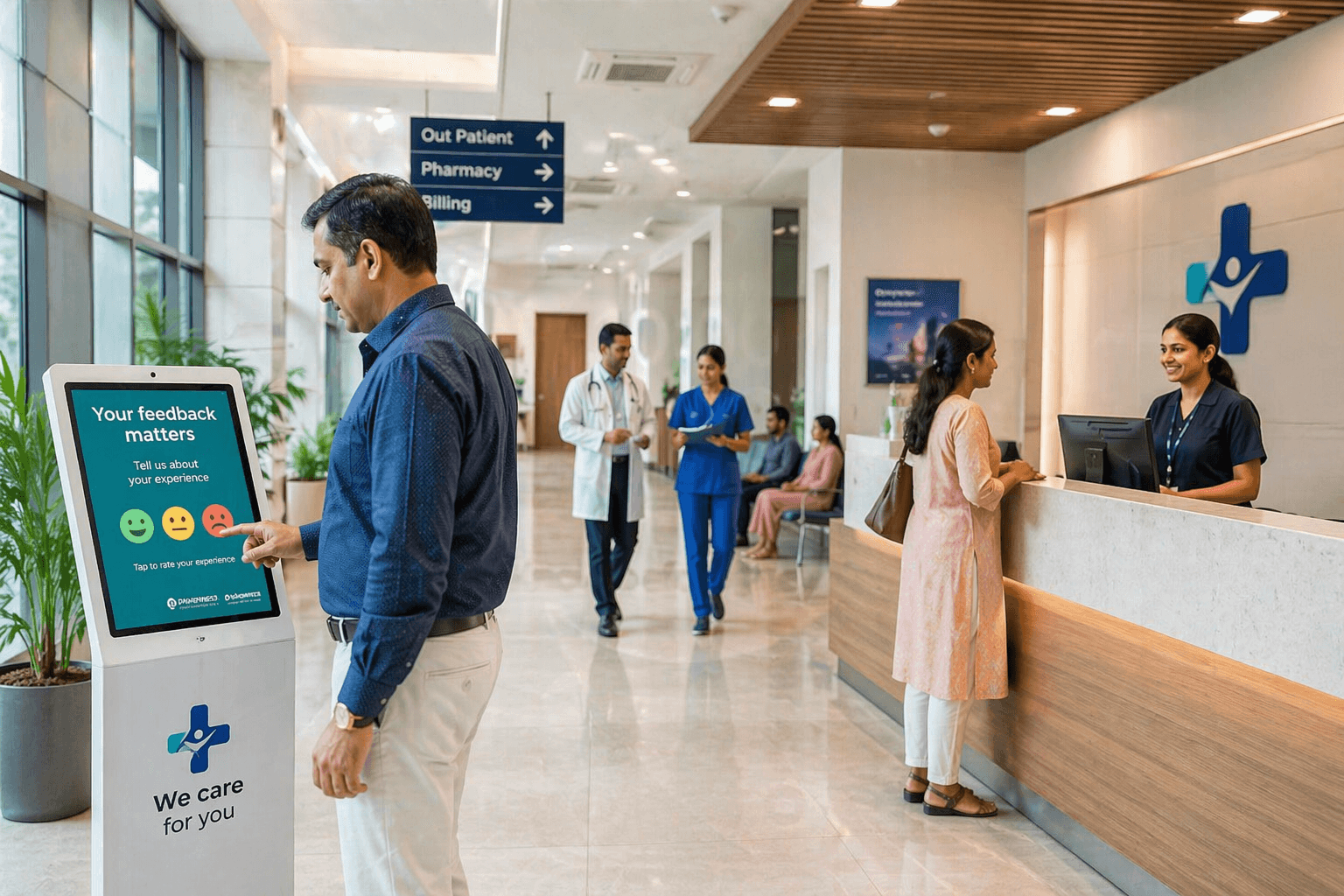
Top Ways to Improve Hospital Online Reviews Through Better Patient Experience
Online reviews have become one of the most powerful decision-making factors in healthcare. Today, patients don’t just choose hospitals based on location, insurance coverage, or referrals—they also check Google ratings, testimonials, and public reviews before booking an appointment.
A single negative review about long waiting times, poor communication, or unfriendly staff can influence dozens of future patients. On the other hand, consistently positive reviews build trust, strengthen reputation, and increase patient preference.
The good news? Better online reviews are rarely about marketing alone. They are usually the result of a better patient experience.
This article explores the most effective ways hospitals can improve online reviews by understanding patient expectations, fixing service gaps, and using real-time feedback tools like PiHappiness to act before issues become public complaints.
Why Hospital Online Reviews Matter for Hospitals
Healthcare decisions are deeply personal. Patients want confidence before choosing a provider. Reviews often answer the questions they care about most:
- Was the doctor professional and caring?
- Was the hospital clean and well-managed?
- How long was the wait time?
- Did staff communicate clearly?
- Was billing transparent?
- Would other patients recommend it?
Strong reviews can lead to:
- Higher patient trust
- More appointments and walk-ins
- Better brand reputation
- Increased patient retention
- Stronger word-of-mouth referrals
Poor reviews, however, can damage credibility quickly.
According to industry research, many patients read online reviews before choosing a healthcare provider, making reputation management an important part of hospital growth. Public feedback now plays a major role in how patients evaluate trust, service quality, and overall experience. Read more in this healthcare reputation insights report by InMoment.
1. Reduce Waiting Time Frustration
One of the most common reasons for negative hospital reviews is waiting too long without updates.
Patients understand that delays happen. What frustrates them most is uncertainty.
How to Improve Wait Time and Improve Hospital Online Reviews
- Display estimated waiting times clearly
- Send SMS or WhatsApp queue updates
- Inform patients immediately about delays
- Improve scheduling efficiency
- Prioritize elderly or urgent patients appropriately
When expectations are managed, patients are more forgiving and more satisfied.
2. Train Frontline Staff on Empathy and Communication to Build Online Hospital Reviews
Receptionists, nurses, billing staff, and support teams often shape the emotional tone of a patient visit.
A highly qualified doctor cannot fully offset a poor front-desk experience.
Focus Areas for Staff Training
- Warm greetings
- Clear directions
- Active listening
- Calm handling of complaints
- Respectful tone under pressure
- Patient privacy and sensitivity
Patients remember how they were treated just as much as the treatment itself.
3. Make Cleanliness and Comfort Non-Negotiable
Hospital cleanliness strongly influences trust. Patients often associate visible hygiene standards with quality of care.
What to Monitor
- Waiting area cleanliness
- Washrooms
- Consultation rooms
- Bedding and patient rooms
- Signage and organization
- Seating comfort
- Air quality and temperature
Even small environmental issues can show up in reviews quickly.
4. Improve Communication During the Patient Journey
Many negative reviews happen because patients feel confused, ignored, or uninformed.
Examples include:
- Not knowing test timelines
- Unclear discharge instructions
- Surprise billing charges
- Difficulty finding departments
- No updates after consultation
How to Improve It
- Use simple language
- Provide written summaries
- Confirm next steps clearly
- Share expected timelines
- Offer help desks or support counters
Clear communication reduces anxiety and builds trust.
5. Capture Feedback Before Patients Leave to Improve Hospital Online Reviews
This is one of the most effective strategies hospitals overlook.
Many unhappy patients never complain in person. They stay silent, go home, and leave a public negative review later.
That’s why hospitals need to collect feedback immediately while the experience is fresh.
Why Real-Time Feedback Works
- Issues can be identified instantly
- Staff can recover the experience before discharge
- Negative sentiment is addressed privately
- Trends become visible quickly
- Positive experiences can be encouraged into reviews
This is where PiHappiness becomes a game-changer.
How PiHappiness Helps Hospitals Improve Hospital Online Reviews
PiHappiness is a smart feedback and survey platform that helps hospitals capture patient sentiment in real time—before it externalizes into public complaints.
Key Benefits for Hospitals
Instant Patient Feedback
Collect responses through tablets, kiosks, QR surveys, or mobile devices during or after visits.
Real-Time Alerts
If a patient reports dissatisfaction, teams can act immediately.
Easy Dashboards
View trends across departments, branches, doctors, or service areas.
Works Offline
Perfect for hospitals with inconsistent connectivity.
Actionable Reports
Identify recurring problems such as waiting time, billing complaints, cleanliness issues, or staff behavior.
Multi-Location Management
Track patient experience across all branches in one dashboard.
Instead of guessing why ratings are falling, hospitals get clear internal data.
6. Turn Positive Experiences into Public Online Hospital Reviews
Many satisfied patients never leave reviews unless asked.
Hospitals can ethically increase positive review volume by making it easy for happy patients to share feedback publicly.
Best Practices
- Ask after successful treatment or smooth discharge
- Send follow-up SMS with review link
- Train staff to request politely
- Keep the process simple and fast
The goal is not to manipulate reviews—but to make it easier for satisfied patients to speak.
7. Monitor Trends, Not Just Individual Complaints
One complaint may be isolated. Repeated complaints indicate a system issue.
For example:
- Same branch receives low cleanliness ratings
- Same time slot has long waiting complaints
- Billing confusion increases monthly
- Specific department has lower satisfaction scores
Hospitals that track trends can fix root causes instead of reacting case by case.
With PiHappiness, these patterns become visible through dashboards and reports.
8. Use Feedback to Build a Better Culture
Patient experience improvement is not just about ratings but it’s about culture.
When teams regularly review feedback, celebrate wins, and solve issues collaboratively, service quality improves naturally.
Hospitals can use feedback to get hospital online reviews:
- Reward top-performing teams
- Coach struggling departments
- Improve SOPs
- Strengthen accountability
- Build patient-first thinking
Better culture creates better reviews over time.
Final Thoughts
Improving hospital online reviews is not about asking for five stars. It’s about creating experiences patients genuinely want to talk about.
When hospitals reduce friction, communicate clearly, solve issues quickly, and listen in real time, positive reviews follow naturally.
Instead of waiting for complaints to appear online, hospitals can act earlier and with better visibility and faster response with hospital online reviews.