Every business wants happy customers, satisfied patients, and engaged employees. Yet many service issues stay hidden until it is too late.
A patient leaves a one star review after a frustrating hospital visit.
A diner posts a complaint about service issues on social media.
An employee resigns after months of silent dissatisfaction.
The real problem is not always the issue itself. It is discovering it too late.
Today, reputation can be shaped in minutes. Public reviews, social media posts, and word of mouth spread faster than ever. That means organizations need a way to identify dissatisfaction internally and immediately before it externalizes.
This is where real time feedback systems like PiHappiness create a major advantage.
Whether you run a hospital, restaurant, or corporate office, early visibility into service issues helps you fix problems faster, improve operations, and protect your reputation.
Table of Contents
- Why Hidden Service Issues Are Dangerous
- Hospitals: Spot Patient Service Issues Before It Becomes a Review
- Restaurants: Catch Bad Dining Experiences Before Guests Leave
- Offices: Identify Employee Friction Before It Becomes Attrition
- Why Traditional Feedback Methods Fail
- How PiHappiness Helps Spot Issues Before They Go Public
- What Early Feedback Changes
- Real Example Scenarios
- Final Thoughts
Why Hidden Service Issues Are Dangerous
Most unhappy people do not complain directly.
They often choose silence first and public feedback later.
That creates three major risks:
- Negative online reviews
- Customer churn or patient loss
- Damage to trust and brand perception
By the time management notices the problem, the experience is already public.
The smarter approach is to create structured ways for people to share feedback privately in real time.
According to customer experience research, many unhappy customers never complain directly to a business and instead choose to leave quietly or share their frustration publicly later. This makes proactive feedback collection essential for organizations that want to detect issues early and fix service issues before reputation damage occurs. Read more in the customer experience trends report by Qualtrics: https://www.qualtrics.com/experience-management/customer/customer-experience-trends/
1. Hospitals: Spot Patient Frustration Before It Becomes a Review
In healthcare, emotions run high. Patients and families may already feel stressed before they enter the building. Small service issues can feel much bigger in that context.
Common Hidden Hospital Issues
- Long waiting times
- Poor communication
- Billing confusion
- Staff attitude concerns
- Cleanliness complaints
- Difficulty navigating departments
- Delayed discharge process
Patients may not raise these concerns face to face. Instead, they often post them online later.
How to Detect Issues Early
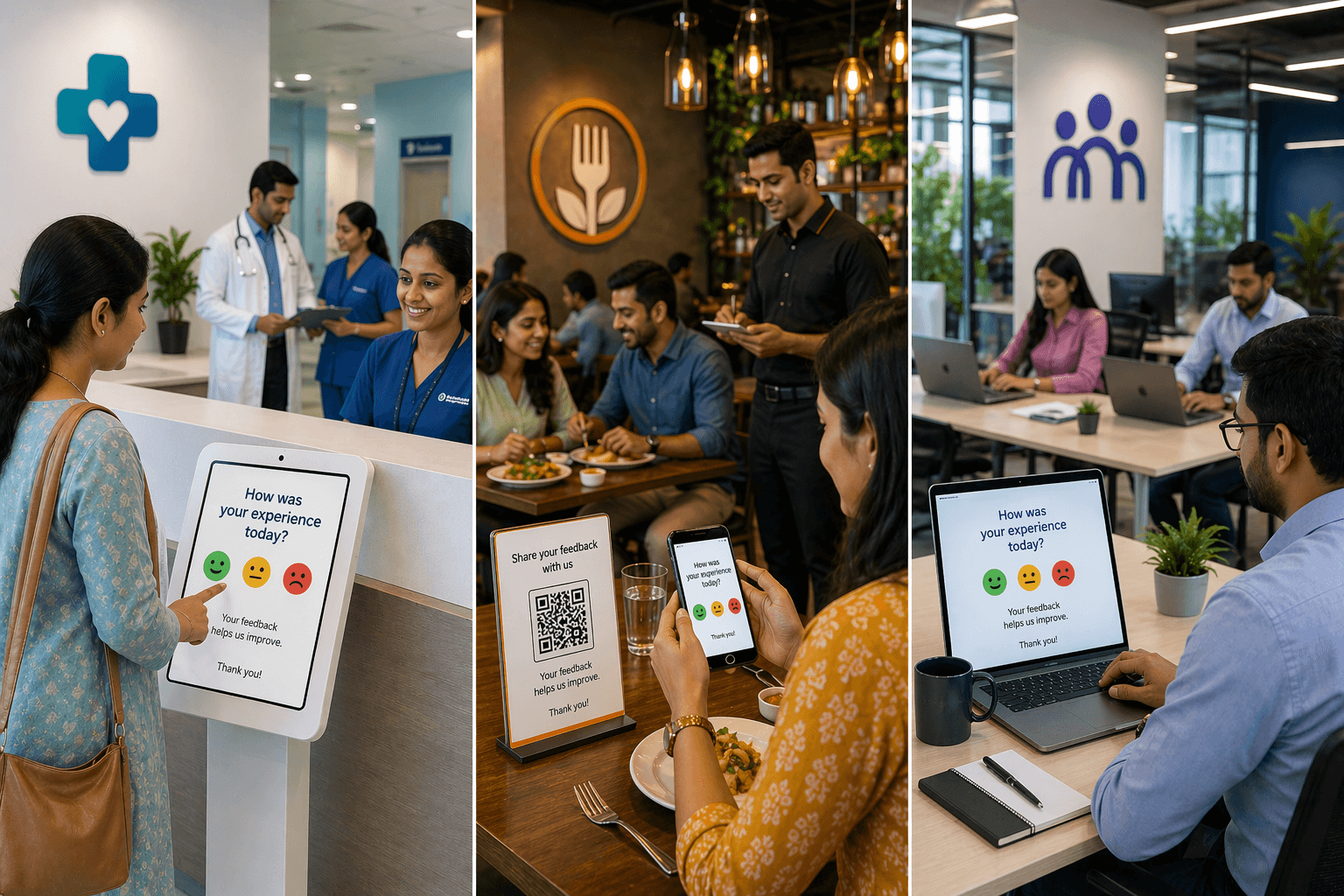
Hospitals can place digital feedback touchpoints at:
- Reception
- OPD waiting areas
- Pharmacy
- Billing desk
- Discharge counters
- SMS follow up after visit
With PiHappiness, hospitals can capture live patient sentiment, trigger alerts for low ratings, and identify recurring service gaps across departments or branches.
That means faster recovery and fewer public complaints.
2. Restaurants: Catch Bad Dining Experiences Before Guests Leave
Restaurants operate in real time. A poor experience can turn into an instant Google review before dessert is served.
Common Hidden Restaurant Issues
- Slow service
- Incorrect orders
- Cold food
- Staff behavior
- Dirty tables or washrooms
- Billing errors
- Long wait for seating
Many guests avoid confrontation. They simply leave unhappy and share it online later.
How to Detect Issues Early
Restaurants can collect instant feedback through:
- Table QR surveys
- Bill counter tablets
- SMS after payment
- Kiosk near exit
- Quick smiley rating systems
Using PiHappiness, restaurant managers can see live feedback during service hours and resolve issues immediately while the guest is still on site.
This turns unhappy exits into recovered experiences.
3. Offices: Identify Employee Friction Before It Becomes Attrition
In offices, service issues are often internal but just as costly.
Employees may not openly express dissatisfaction about management, culture, workload, or workplace processes. Instead, engagement drops, productivity suffers, and resignations increase.
Common Hidden Office Issues
- Low morale
- Poor communication from leadership
- Manager conflicts
- Lack of recognition
- Burnout
- Facility concerns
- Process frustrations
- Weak onboarding experience
Annual surveys are too slow to catch fast moving problems.
How to Detect Issues Early
Modern offices need ongoing feedback systems such as:
- Anonymous pulse surveys
- Department check ins
- New joiner surveys
- Exit surveys
- Monthly happiness scores
- Culture feedback forms
With PiHappiness, HR and leadership teams gain real time visibility into workforce sentiment and can act before dissatisfaction becomes disengagement or attrition.
Why Traditional Feedback Methods Fail
Many businesses still rely on outdated methods like:
- Suggestion boxes
- Annual surveys
- Complaint registers
- Informal manager feedback
- Random review monitoring
These methods often fail because they are:
- Too slow
- Hard to analyze
- Inconsistent
- Low participation
- Difficult to scale across branches
Organizations need faster and smarter systems.
According to customer experience research, organizations that actively collect feedback and respond quickly are more likely to improve satisfaction, loyalty, and retention. Whether in healthcare, hospitality, or workplaces, timely feedback helps businesses solve issues earlier and build stronger long term relationships. Read more in Qualtrics’ guide to customer experience management.
How PiHappiness Helps Spot Issues Before They Go Public
PiHappiness is a smart survey and feedback platform built to help businesses capture feedback internally and immediately.
Instead of waiting for public complaints, organizations receive actionable insights first.
Core Benefits
Real Time Feedback Collection
Gather responses instantly through tablets, kiosks, QR forms, mobile surveys, or links.
Smart Dashboards
Track trends by branch, department, location, shift, or service area.
Instant Alerts
Low ratings or poor sentiment can be escalated quickly.
Multi Location Visibility
Manage feedback across hospitals, restaurant chains, or office branches in one place.
Works Offline
Ideal for high footfall or low connectivity environments.
Actionable Reports
See what needs attention now, not months later.
What Early Feedback Changes
When businesses act early, they can:
- Recover poor experiences quickly
- Prevent negative reviews
- Improve operations
- Build loyalty
- Increase trust
- Reduce churn
- Strengthen team accountability
The biggest value of feedback is not the score. It is the chance to improve in time.
Real Example Scenarios
Hospital
A patient rates waiting time poorly at the billing desk. The supervisor intervenes immediately and assists before discharge.
Restaurant
Guests flag slow service through a QR survey. The manager offers support and resolves the issue before checkout.
Office
Employees report burnout in a pulse survey. HR adjusts workload planning and manager support.
In each case, the issue stayed internal and got solved faster.
Final Thoughts
Service problems are inevitable. Public damage is not.
Hospitals, restaurants, and offices that collect real time feedback gain something powerful: visibility before reputation risk.
Instead of learning through one star reviews, resignations, or complaints, they learn directly from the people they serve.
That is how better organizations are built.