Growing from one location to many is a major milestone for any business. It signals demand, momentum, and brand success. But expansion brings a new challenge that many companies underestimate: consistency. That is why it is important to standardize experience.
A customer who loves your first branch expects the same quality at your second, third, or tenth location. Patients expect the same care standards across every hospital branch. Employees expect the same culture across offices.
When experiences vary by location, trust begins to weaken.
That is why successful multi location businesses move from guesswork to data. Instead of assuming all branches perform equally, they use real time feedback to measure experience, identify gaps, and standardize expereince is great service looks like.
With PiHappiness, businesses can collect feedback across locations and manage insights from one centralized dashboard.
Why Consistency Matters More Than Growth
Opening new locations increases visibility and revenue potential. But if service quality drops, growth can quickly become expensive.
Common risks of inconsistency include:
- Negative reviews for specific branches
- Lower repeat visits
- Poor word of mouth
- Staff confusion about standards
- Uneven training outcomes
- Weak brand trust
- Customer churn
A brand is only as strong as its weakest location.
Why Guesswork Fails in Multi Location Operations
Many businesses rely on assumptions such as:
- No news means everything is fine
- Managers will report issues
- Complaints will surface naturally
- Good sales mean good experience
- Head office already knows what is happening
These assumptions create blind spots.
A branch may hit sales targets while still frustrating customers. Another may have great staff but poor waiting times. Without structured feedback, leadership cannot see the full picture.
What Feedback Data Reveals
Real time feedback helps organizations understand what is actually happening at each location and helps you standardize experience.
It can reveal:
- Which branches have the highest satisfaction
- Which branches need support
- Recurring complaints by region
- Staff behavior trends
- Service speed issues
- Cleanliness concerns
- Employee morale differences
- Improvement progress over time
This turns scattered opinions into measurable insights.
According to customer experience research, brands that consistently measure and improve experiences across locations are more likely to build loyalty and long term growth. Standardize experience service supported by real customer insights helps businesses scale without losing quality. Read more in Qualtrics’ guide to experience management:
How Different Industries Use Multi Location Feedback
Healthcare Groups
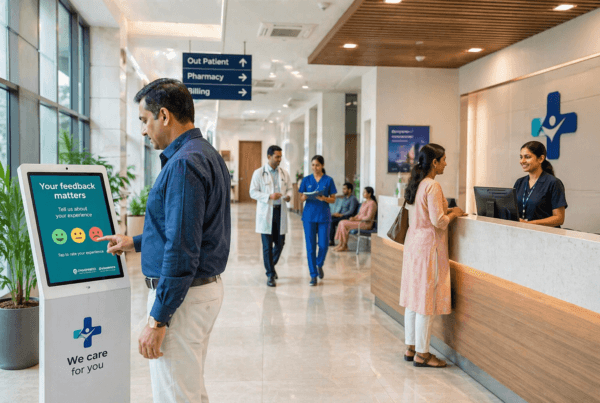
Hospital networks and clinic chains need consistency in trust and care quality in turn standarize experience.
Feedback data can help track:
- Waiting time satisfaction
- Staff courtesy
- Cleanliness scores
- Billing experience
- Department performance
- Branch comparisons
This allows leadership to support underperforming facilities before public reviews increase.
Restaurants and Hospitality Brands
For restaurants, cafés, hotels, and service chains, customer experience directly affects reputation.
Feedback data can uncover:
- Slow service locations
- Food quality issues
- Cleanliness gaps
- Staff friendliness trends
- Repeat guest satisfaction
- Shift based service problems
Managers can quickly compare outlets and replicate best practices.
Offices and Corporate Branches
For businesses with multiple offices, consistency also matters internally.
Feedback systems help monitor:
- Employee happiness by location
- Manager effectiveness
- Workplace culture trends
- Onboarding experience
- Burnout risks
- Engagement levels
This helps leadership build one culture across many sites.
The Power of Standardization
Standardization does not mean making every location identical. It means ensuring every location meets your core brand promise.
That could include:
- Friendly service
- Fast response times
- Clean environments
- Clear communication
- Reliable processes
- Respectful staff interactions
Feedback data helps define these standards and measure whether each location is delivering them. That way setting up standardize experience across the domains.
How PiHappiness Helps Multi Location Businesses
PiHappiness is built for organizations that need visibility across multiple branches, teams, or service environments.
It helps businesses collect feedback internally and immediately, then convert responses into action.
Key Benefits
One Dashboard for All Locations
Track every branch from one centralized view.
Real Time Feedback Collection
Capture responses through kiosks, tablets, QR surveys, links, and mobile devices.
Branch Comparison Reports
Identify top performers and locations needing support.
Smart Alerts
Low scores can trigger quick intervention.
Actionable Trends
See patterns across weeks, months, and regions.
Works Offline
Ideal for high footfall locations or mixed connectivity environments.
Real Example Scenario
Imagine a business with 12 locations.
Without data, leadership depends on occasional reports and assumptions.
With PiHappiness, they can instantly see:
- Branch A leads in satisfaction
- Branch C has recurring waiting complaints
- Branch F has lower staff courtesy scores
- Branch J improved after new training
- Overall ratings increased this quarter
That is how smarter expansion happens.
Why Standardize Experience Matters for Long Term Growth
Businesses that want sustainable growth must standardize experience across every customer touchpoint. Whether a customer visits your first branch or your tenth branch, they expect the same service quality, response time, professionalism, and overall satisfaction. Brands that fail to standardize experience often face inconsistent reviews, lower trust, and weaker loyalty.
To standardize experience, businesses need more than training manuals or SOP documents. They need real customer feedback that shows what is happening in real time. Assumptions do not help teams standardize experience. Data does.
When leaders can compare locations, identify service gaps, and measure satisfaction trends, it becomes easier to standardize experience at scale. A branch with low ratings can receive support quickly. A high performing branch can become the benchmark for others. This is how smart organizations standardize experience while continuing to expand.
Technology also plays a key role. Platforms like PiHappiness help businesses collect instant feedback, review analytics, and take faster action. Instead of waiting for complaints to surface publicly, brands can solve issues internally and continuously standardize experience across all locations.
The companies that grow strongest are often the ones that deliver the most reliable experience. They know that growth without consistency creates risk. That is why modern businesses invest in systems that help them standardize experience every day.
If your business is opening new branches, managing multiple teams, or expanding into new markets, now is the right time to focus on how you standardize experience. It improves customer trust, strengthens reputation, and creates a foundation for long term success.