Businesses rarely struggle because they lack data. More often, they struggle because they receive important information too late.
A customer leaves a store dissatisfied, abandons a digital checkout process, experiences a service issue, or submits a complaint. By the time management discovers the problem through monthly reports or quarterly reviews, dozens or even hundreds of customers may have already experienced the same issue.
This is where real-time customer feedback becomes valuable. Instead of waiting weeks to understand customer sentiment, organizations can collect, analyze, and act on feedback as experiences happen. Real-time feedback enables teams to identify emerging issues, understand customer expectations, prioritize improvements, and make faster business decisions based on actual customer experiences rather than assumptions.
In this article, we’ll explore what real-time customer feedback is, why it matters, how it supports faster decision-making, the metrics and tools involved, common implementation challenges, and best practices for turning customer feedback into meaningful business action.
What Is Real-Time Customer Feedback?
Real-time customer feedback is the collection and analysis of customer opinions, ratings, comments, and experience data immediately after or during an interaction.
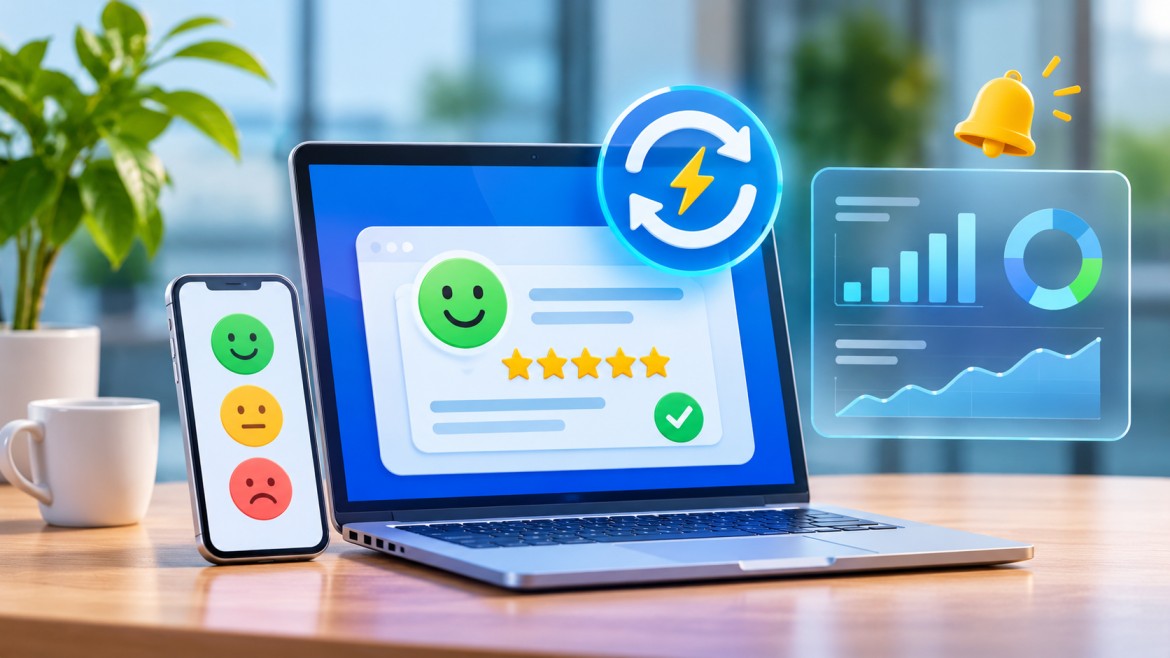
Instead of relying solely on periodic surveys, organizations gather customer feedback at critical moments throughout the customer journey, such as:
- After a purchase
- Following a support interaction
- During product usage
- After a service appointment
- Following website or app interactions
- After event participation
- During onboarding processes
The objective is simple: understand what customers are experiencing while the information is still relevant and actionable.
Real-time customer feedback programs often combine:
- Surveys
- Ratings and reviews
- Customer comments
- Customer effort feedback
- Net Promoter Score (NPS) responses
- Customer Satisfaction Score (CSAT) measurements
- Customer support interactions
- Digital behavior insights
By collecting information continuously, businesses can identify patterns and respond much faster than traditional feedback cycles allow.
Why Fast Decision-Making Matters in Customer Experience
Customer expectations continue to evolve across industries. Customers expect organizations to:
- Resolve problems quickly
- Listen to feedback
- Personalize experiences
- Remove friction from customer journeys
- Continuously improve products and services
When decision-making is delayed, organizations face several risks:
| Delayed Decision-Making | Real-Time Decision-Making |
| Issues remain unresolved longer | Problems are identified early |
| Customer frustration increases | Customer concerns are acknowledged quickly |
| Teams react to historical data | Teams act on current customer needs |
| Trends are discovered after impact occurs | Emerging trends are detected sooner |
| Operational inefficiencies persist | Continuous improvement becomes possible |
Modern customer experience programs increasingly depend on timely feedback because customer sentiment can change quickly across digital and physical touchpoints.
How Real-Time Customer Feedback Supports Faster Business Decisions

- Identifying Customer Pain Points Immediately
One of the greatest benefits of real-time customer feedback is visibility into customer issues as they occur.
Consider a retail business introducing a new checkout process. If customers consistently report confusion through post-purchase surveys during the first few days, management receives immediate evidence that something requires attention.
Without real-time feedback, the organization might discover the problem weeks later through declining sales or customer complaints.
By identifying pain points earlier, teams can:
- Investigate root causes
- Prioritize fixes
- Update processes
- Train staff
- Improve communications
This reduces the time between problem detection and corrective action.
- Enabling Data-Driven Operational Decisions
Many operational decisions are often based on assumptions.
For example:
- Are customers satisfied with wait times?
- Is a new process creating frustration?
- Are service teams meeting expectations?
- Is product onboarding clear enough?
Real-time customer insights provide direct customer input that supports evidence-based decisions.
Instead of debating assumptions internally, leaders can review actual customer responses and determine where action is most needed.
This creates greater confidence in:
- Process improvements
- Resource allocation
- Staffing decisions
- Service enhancements
- Product updates
- Improving Incident Response and Service Recovery
Customer issues become more difficult to resolve as time passes.
When organizations receive immediate feedback:
- Support teams can follow up faster.
- Managers can investigate problems sooner.
- Service failures can be addressed before escalation.
- Customer trust may be preserved through timely action.
This approach is often called closed-loop feedback management, where organizations actively follow up with customers after receiving negative feedback.
Rather than treating feedback as historical information, businesses use it as a trigger for immediate action.
- Monitoring Customer Sentiment During Business Changes
Organizations frequently introduce:
- New products
- Policy changes
- Pricing adjustments
- Website redesigns
- Digital transformation initiatives
- Service changes
Real-time customer feedback acts as an early warning system during these transitions.
Instead of waiting for performance reviews or quarterly customer satisfaction reports, teams can monitor customer reactions immediately and make adjustments if necessary.
This reduces the risk of small problems becoming widespread customer experience issues.
- Supporting Agile Decision-Making
Many businesses have adopted more agile operational models.
Agile decision-making depends on:
- Continuous learning
- Fast feedback loops
- Frequent adjustments
- Customer-centric prioritization
Real-time customer feedback aligns naturally with these principles.
When customer experience analytics continuously reveal customer needs and friction points, teams can make incremental improvements rather than waiting for major review cycles.
The Role of Voice of the Customer (VoC) Programs
A Voice of the Customer (VoC) program is a structured approach to collecting, analyzing, and acting on customer feedback from multiple touchpoints. The term VoC was originally popularized as a systematic method for understanding customer requirements and experiences.
A strong VoC program may include:
- Surveys
- Contact center feedback
- Online reviews
- Social feedback
- Website feedback
- Customer interviews
- Complaint analysis
Real-time customer feedback strengthens VoC initiatives by ensuring insights are available while experiences are still fresh.
Organizations with mature VoC programs generally focus on three questions:
- What are customers telling us?
- Why are they saying it?
- What actions should we take?
The third question is where decision-making value is realized.
Key Metrics for Real-Time Customer Satisfaction Measurement
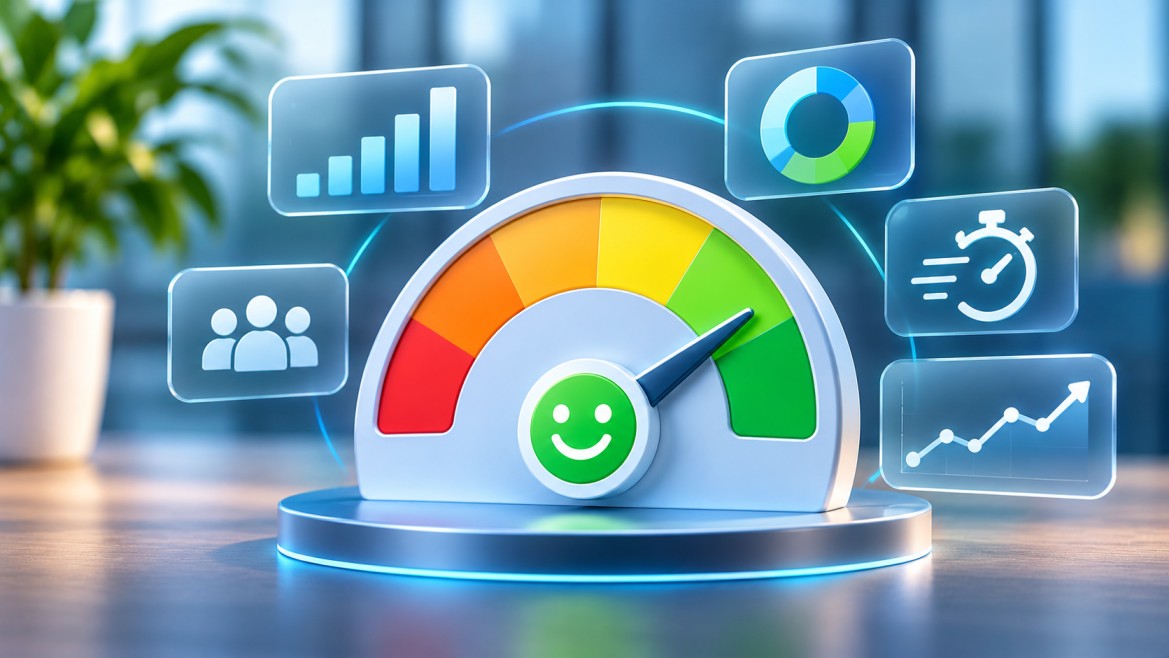
Customer Satisfaction Score (CSAT)
CSAT measures satisfaction with a specific interaction, service, or experience. It is often collected immediately after customer interactions.
Example question:
“How satisfied were you with your experience today?”
CSAT is particularly useful for:
- Customer support
- Retail interactions
- Service delivery
- Product experiences
Net Promoter Score (NPS)
NPS measures customer loyalty and willingness to recommend a company, product, or service. It is based on a 0-10 recommendation scale
Example question:
“How likely are you to recommend us to a friend or colleague?”
NPS helps organizations understand broader relationship health rather than individual interactions.
Customer Effort Score (CES)
CES measures how easy it was for customers to complete a task or resolve an issue. Customer effort is widely recognized as an important indicator of customer experience quality.
Example question:
“How easy was it to resolve your issue?”
High-effort experiences often indicate opportunities for process improvement.
Customer Retention Rate
Retention measures how effectively businesses retain customers over time.
While retention is not a real-time metric itself, ongoing feedback helps organizations identify issues that may contribute to customer loss.
Customer Churn Rate
Churn measures the percentage of customers who discontinue their relationship with a company.
Tracking real-time feedback alongside churn trends can help organizations identify recurring causes of dissatisfaction before they impact larger customer segments.
Real-Time Customer Feedback Across the Customer Journey
Feedback becomes more useful when aligned with specific customer journey stages.
| Journey Stage | Feedback Opportunity | Business Value |
| Awareness | Website surveys | Understand visitor needs |
| Consideration | Product inquiries | Identify common objections |
| Purchase | Checkout feedback | Reduce purchase friction |
| Onboarding | Onboarding surveys | Improve adoption |
| Support | Post-support surveys | Improve service quality |
| Retention | Relationship surveys | Monitor loyalty |
| Advocacy | NPS programs | Identify promoters and referrals |
This journey-based approach helps organizations prioritize improvements based on customer impact.
Practical Example: How Real-Time Feedback Accelerates Decisions
Imagine a healthcare provider launches a new online appointment scheduling system.
Without real-time feedback:
- Management notices appointment completion declines after several weeks.
- Patients begin submitting complaints.
- Staff report issues informally.
- Investigation starts after business performance drops.
With real-time customer feedback:
- Patients immediately report scheduling difficulties.
- Customer experience analytics reveal where failures occur.
- Operations teams investigate specific touchpoints.
- Improvements are made within days rather than weeks.
The difference is not simply data availability.
The difference is decision speed.
Building an Effective Real-Time Customer Feedback Strategy
Step 1: Identify Critical Customer Touchpoints
Start by mapping the customer journey.
Identify moments where customer input provides the most value:
- Purchases
- Support interactions
- Deliveries
- Renewals
- Service visits
- Product onboarding
Focus feedback collection on these high-impact interactions.
Step 2: Ask Relevant Questions
Customers are more likely to respond when surveys are short and relevant.
Good real-time feedback questions:
- Are specific
- Require minimal effort
- Focus on recent experiences
- Encourage actionable responses
Avoid lengthy surveys immediately after customer interactions.
Step 3: Create Automated Alerts
Real-time feedback becomes more valuable when teams are automatically notified of issues.
Examples include:
- Low satisfaction scores
- Negative NPS responses
- High customer effort ratings
- Critical service complaints
Automation reduces response delays.
Step 4: Analyze Trends, Not Just Individual Responses
Individual responses matter.
Patterns matter more.
Customer experience analytics should help organizations identify:
- Recurring complaints
- Location-based issues
- Product-specific trends
- Service bottlenecks
- Operational challenges
Trend analysis supports strategic decision-making.
Step 5: Close the Loop
Collecting feedback without action frustrates both customers and employees.
Organizations should:
- Acknowledge customer feedback
- Investigate concerns
- Communicate resolutions when appropriate
- Share findings internally
Closing the feedback loop strengthens trust and accountability.
Common Challenges in Customer Feedback Management
Feedback Overload
Collecting more feedback does not automatically create more value.
Organizations often accumulate large volumes of feedback without clear action plans.
Focus on:
- Prioritization
- Categorization
- Root-cause analysis
Data Silos
Feedback often exists across:
- Surveys
- CRM systems
- Contact centers
- Social media
- Review platforms
Disconnected data limits visibility.
Successful customer feedback management integrates feedback from multiple channels into a unified view.
Slow Internal Response
Sometimes feedback is collected quickly but acted upon slowly.
This reduces the benefit of real-time insights.
Organizations should establish:
- Ownership
- Escalation processes
- Response timelines
- Accountability measures
Privacy and Data Governance
Customer feedback frequently includes personal information.
Businesses must ensure compliance with applicable privacy regulations and implement transparent data practices. Customer feedback can contain personally identifiable information, including details revealed in open-text responses, which makes responsible data handling essential.
Best practices include:
- Clearly informing customers about data usage
- Limiting data collection to necessary information
- Defining retention policies
- Securing feedback data appropriately
- Providing mechanisms for customer data requests where required
Best Practices for Using Real-Time Customer Insights
Make Feedback Visible Across Teams
Customer feedback should not remain isolated within CX teams.
Relevant insights should be shared with:
- Operations
- Marketing
- Product teams
- Service leaders
- Executive stakeholders
Combine Quantitative and Qualitative Feedback
Scores tell you what happened.
Comments help explain why it happened.
The strongest insights come from combining both.
Prioritize Actionability
Not every feedback item requires immediate action.
Focus on:
- High-frequency issues
- High-impact problems
- Recurring customer pain points
- Strategic improvement opportunities
Establish Feedback-to-Action Workflows
Every feedback program should answer:
- Who reviews feedback?
- How quickly is it reviewed?
- Who owns resolution?
- How are outcomes tracked?
Without clear workflows, valuable insights often go unused.
Measure Improvement Over Time
Track whether actions lead to measurable change.
Useful indicators may include:
- CSAT trends
- NPS trends
- Customer effort improvements
- Complaint reduction
- Retention improvements
Continuous measurement helps validate improvement efforts.
How Technology Supports Faster Feedback-Driven Decisions
Modern customer experience platforms help organizations capture and analyze feedback at scale.
For example, piHappiness provides customer feedback management capabilities that allow organizations to collect feedback across multiple channels, measure customer satisfaction, monitor NPS and CSAT responses, and access real-time dashboards and reporting capabilities. According to the company’s platform information, it supports real-time reporting, survey distribution, case management, and customer experience monitoring.
Technology alone does not improve customer experience.
However, when combined with clear processes and organizational accountability, customer feedback platforms can help teams move from collecting feedback to acting on it more efficiently.
Real-time customer feedback gives organizations something that traditional feedback programs often struggle to deliver: speed.
By collecting customer input at the moment experiences occur, businesses gain immediate visibility into customer expectations, operational issues, service gaps, and emerging trends. These insights support faster, evidence-based decisions across customer service, operations, marketing, product development, and customer experience teams.
The most successful organizations treat feedback as more than a measurement tool. They use it as an ongoing decision-making resource that helps them identify problems sooner, understand customers better, and continuously improve experiences.
Whether you are building a Voice of the Customer program, improving customer satisfaction measurement, or strengthening customer feedback management processes, the goal remains the same: turn customer insights into timely actions that create better business outcomes.
Platforms such as piHappiness can support these efforts by helping organizations collect, analyze, and manage customer feedback across customer touchpoints while providing the visibility required for faster customer-centric decision-making.
Frequently Asked Questions
- What is real-time customer feedback?
Real-time customer feedback refers to collecting customer opinions, ratings, and comments immediately after or during an interaction so businesses can identify issues and respond quickly.
- Why is real-time customer feedback important?
It helps organizations detect customer pain points earlier, improve service recovery, support faster decision-making, and make improvements based on current customer experiences rather than historical data.
- How does real-time customer feedback differ from traditional feedback collection?
Traditional feedback is often collected periodically and analyzed later. Real-time feedback is captured immediately, enabling faster analysis and action.
- What metrics are commonly used in real-time customer feedback programs?
Common metrics include Customer Satisfaction Score (CSAT), Net Promoter Score (NPS), Customer Effort Score (CES), retention rate, churn rate, and other Voice of the Customer indicators.
- What is a Voice of the Customer (VoC) program?
A Voice of the Customer program is a structured process for collecting, analyzing, and acting on customer feedback from multiple touchpoints to improve customer experiences and business performance.
- Which industries benefit most from real-time customer feedback?
Retail, healthcare, hospitality, financial services, telecom, SaaS, education, logistics, transportation, and government services can all benefit from real-time customer feedback programs.
- How can businesses act on customer feedback more effectively?
Organizations should create clear ownership structures, automate alerts, analyze trends, prioritize high-impact issues, and establish feedback-to-action workflows.
- What are the biggest challenges in customer feedback management?
Common challenges include feedback overload, disconnected data sources, slow response processes, low survey participation, and privacy compliance requirements.