Winning a new customer is an important achievement, but convincing that customer to stay is what helps a business build lasting value. A successful first purchase does not automatically lead to a second transaction, a subscription renewal, or a long-term relationship. Customers continue choosing a business when they receive consistent value, feel understood, and have confidence that their needs will be addressed.
For many organisations, customer retention becomes challenging when expectations change faster than their ability to respond. A product may perform well, but slow customer support, confusing processes, inconsistent communication, or unresolved complaints can weaken the relationship. Customers may not always explain why they are leaving; they may simply stop purchasing or move to a competitor.
This is why effective customer retention requires more than promotional offers and loyalty rewards. Businesses need to understand what customers value, identify the problems affecting their experience, and make improvements that give people a genuine reason to stay.
The most effective retention strategies connect customer feedback with meaningful action. They help businesses identify dissatisfaction early, personalise interactions appropriately, simplify customer journeys, and measure whether improvements are making a difference.
In this guide, we explore practical customer retention strategies that businesses can implement, the metrics that help measure their effectiveness, and how piHappiness customer experience software can support a more structured approach to understanding customers and strengthening long-term relationships.
Customer Retention Strategies That Build Long-Term Loyalty
Customer retention improves when businesses consistently deliver on their promises and respond to what customers actually need. The following strategies focus on practical improvements that can strengthen customer relationships across different industries.

Understand Why Customers Stay or Leave
Before introducing a retention campaign, identify the reasons customers continue doing business with you-or decide to leave.
Customers may value product reliability, convenient service, transparent pricing, helpful support, or a smooth purchasing process. Others may become dissatisfied because of recurring issues that the business has not recognized.
Start by reviewing customer feedback, complaints, cancellation reasons, repeat purchase behavior, and support interactions. Look for patterns across customer groups, products, locations, and stages of the customer journey.
For example, a subscription-based software company might notice that customers who struggle during onboarding are more likely to cancel within their first few months. Rather than immediately offering discounts, the company could investigate the onboarding process, improve product guidance, and provide more timely assistance.
This approach addresses the reason behind customer dissatisfaction instead of simply trying to prevent the immediate loss.
Deliver a Consistent Customer Experience
Customers expect a business to provide a reasonably consistent experience regardless of the channel they use. If information differs between a website, sales representative, and support team, customers may lose confidence in the organisation.
Consistency involves more than using the same brand messaging. It means providing accurate information, honouring commitments, maintaining service standards, and making it easy for customers to move between channels without repeatedly explaining their situation.
Consider a retailer whose customers receive different answers about return policies depending on whom they contact. Even if individual employees are trying to help, the inconsistent information creates unnecessary frustration.
Businesses can improve consistency by documenting service procedures, training employees, reviewing customer journeys, and ensuring that relevant customer information is accessible to authorised teams.
Regularly collecting feedback at important touchpoints can also reveal where the experience varies between branches, departments, or channels.
Personalise Customer Interactions Where They Add Value
Personalization helps customers receive information, recommendations, and support that is relevant to their needs. When implemented thoughtfully, it can make interactions more useful and reduce unnecessary communication.
Businesses can use information such as previous purchases, stated preferences, product usage, and past support requests to tailor their approach. For example, an online retailer might recommend accessories related to a recent purchase, while a software company could provide guidance based on the features a customer is learning to use.
However, personalization should be helpful rather than intrusive. Customers should not feel that a business is using information in unexpected ways or sending irrelevant messages simply to increase engagement.
Give customers appropriate choices about communication preferences, respect applicable privacy requirements, and use customer data only for legitimate purposes.
The objective is to make the experience more relevant-not to contact customers more frequently without a clear reason.
Collect Customer Feedback and Act on It
One of the most effective customer retention strategies is to make feedback part of everyday business operations.
Customer satisfaction scores can show whether an experience was positive or negative, but written comments often explain why. A customer may give a low rating because of delayed delivery, confusing instructions, slow support, or an unresolved product issue.
A structured feedback process helps businesses identify these concerns before they become recurring problems.
Useful feedback questions include:
- How satisfied are you with your recent experience?
- Was it easy to resolve your issue? it easy to resolve your issue?
- What could we improve about our product or service?
- What is the main reason you would continue choosing our business?
Businesses should collect feedback at relevant moments rather than repeatedly sending surveys without a clear purpose.
Most importantly, assign responsibility for responding to actionable feedback. If customers repeatedly report the same problem, the relevant team should investigate its cause, introduce an appropriate improvement, and review subsequent responses.
Resolve Customer Problems Quickly and Effectively
A customer’s decision to remain with a business can depend on how the organisation responds when something goes wrong.
Even reliable products and services can occasionally create problems. What matters is whether customers can obtain assistance without unnecessary delays, repeated explanations, or confusing escalation procedures.
An effective resolution process should include clear ownership, appropriate response targets, accessible support channels, and a way to track outstanding issues.
Businesses should also distinguish between resolving individual complaints and addressing their underlying causes. If the same billing problem affects multiple customers, the organisation may need to review its processes rather than continue handling each case separately.
Tracking first-contact resolution, repeat contacts, complaint resolution time, and post-resolution satisfaction can help identify where support processes need improvement.
Build a Loyalty Programme That Offers Genuine Value
Loyalty programmes can encourage repeat purchases when their benefits are relevant, easy to understand, and worth the effort required to earn them.
Depending on the business model, rewards might include points, exclusive benefits, service upgrades, member pricing, early access to products, or recognition for continued engagement.
However, rewards alone cannot compensate for poor service or a product that fails to meet expectations. A customer who repeatedly experiences problems may not remain loyal simply because a purchase earns points.
Before introducing a programme, consider what customers genuinely value and whether the rewards support profitable, sustainable behaviour.
Improve Onboarding and Customer Education
The early stages of a customer relationship often influence whether people recognize the value of a product or service.
If customers do not understand how to use a product, access its features, or obtain assistance, they may become frustrated before experiencing its benefits.
A structured onboarding process can help customers get started more confidently. Depending on the product, this may include welcome emails, setup instructions, demonstrations, tutorials, knowledge bases, or guided product tours.
Use Customer Segmentation to Make Retention More Relevant
Not every customer has the same needs, expectations, or reasons for remaining with a business. A single retention campaign may therefore be ineffective for a diverse customer base.
Segmentation helps organisations group customers according to relevant characteristics, such as purchase history, product usage, lifecycle stage, stated preferences, or support requirements.
For example, a first-time customer may need onboarding guidance, while a long-standing customer may appreciate relevant product updates or more efficient service. A customer who has recently reported a problem may require follow-up rather than a promotional message.
Use segmentation to make communication and support more appropriate, not to make unsupported assumptions about individuals.
Review the performance of different customer groups to identify where satisfaction is falling, which issues recur, and which interventions appear helpful.
This allows retention efforts to focus on actual customer needs instead of treating every customer relationship in the same way.
How to Measure and Improve Customer Retention With Customer Experience Software
Customer retention becomes easier to manage when businesses can measure customer behaviour, understand feedback, and evaluate the results of their actions. Software can support this process by bringing feedback and reporting into a more organised workflow.

Track the Right Customer Retention Metrics
Before assessing whether a strategy works, establish a baseline and select measures that reflect your business model. A retail company may focus on repeat purchases, while a subscription business may prioritise renewals and cancellations.
Important metrics include:
| Metric | What it measures |
| Customer retention rate | The proportion of existing customers retained over a defined period |
| Customer churn rate | The proportion of customers lost during a defined period |
| Repeat purchase rate | The proportion of customers who purchase again |
| Customer Satisfaction Score (CSAT) | Satisfaction with a particular product, service, or interaction |
| Net Promoter Score | Customers’ willingness to recommend a business |
| Customer Effort Score (CES) | How easy customers find a particular interaction |
| Customer lifetime value (CLV) | The estimated value a customer contributes over the relationship |
These measures provide different perspectives and should not be treated as interchangeable. Satisfaction and recommendation scores reflect customer perceptions, while retention and churn measure aspects of customer behaviour.
Turn Customer Feedback Into Measurable Improvements
Customer feedback is valuable when it leads to changes that address real problems.
Start by grouping responses into themes, such as product quality, communication, pricing, usability, or support. Then prioritise the issues based on their frequency, severity, customer impact, and feasibility of resolution.
Suppose a software company receives repeated comments about difficulty navigating its dashboard. The product team could simplify the interface, introduce clearer guidance, and review subsequent customer feedback.
To evaluate the outcome, compare relevant measures before and after the change. These might include satisfaction scores, support requests related to navigation, and completion rates for key tasks.
Not every improvement produces an immediate change in retention, so businesses should allow an appropriate period for evaluation and consider other factors that may influence results.
A disciplined feedback process helps teams distinguish between changes that merely generate activity and those that improve the customer experience.
Build a Continuous Customer Retention Process
Customer expectations change, and a strategy that works today may need adjustment as products, markets, and customer needs evolve.
Establish a regular review process that connects feedback, operational performance, and customer behaviour. Assign ownership for priority issues and ensure that teams understand which outcomes they are responsible for improving.
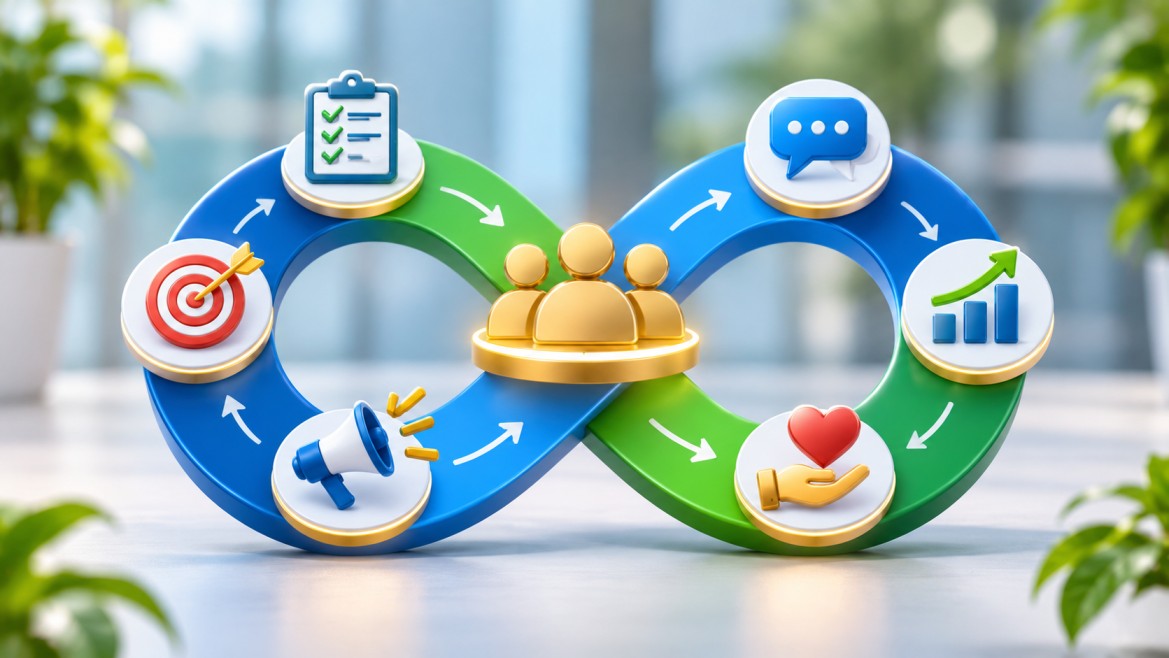
A practical cycle includes collecting customer feedback, identifying patterns, prioritising improvements, implementing changes, and measuring results.
It is also useful to communicate relevant improvements to customers. When a business responds to a concern and explains what has changed, it demonstrates that feedback is being taken seriously.
Avoid measuring success solely by the number of surveys completed or campaigns launched. Focus instead on whether customers receive better service, encounter fewer recurring problems, and continue finding value in the relationship.
Customer retention is not achieved through discounts or loyalty rewards alone. It develops when businesses consistently deliver value, understand customer expectations, and respond effectively when something goes wrong.
The most effective customer retention strategies begin with understanding why customers stay or leave. By collecting relevant feedback, improving service quality, simplifying customer journeys, and measuring results, businesses can identify opportunities to strengthen relationships and create more consistent experiences.
However, gathering feedback is only the beginning. Organisations need a structured way to analyse customer responses, identify recurring issues, and ensure that the right teams take action.
piHappiness helps businesses turn customer feedback into actionable insights through customer experience and feedback management software. From collecting survey responses to monitoring satisfaction metrics and organising follow-up actions, piHappiness can support a more informed approach to customer retention.
Frequently Asked Questions
- What are the most effective customer retention strategies?
Effective strategies include collecting customer feedback, improving customer support, personalising relevant interactions, simplifying onboarding, resolving complaints promptly, and delivering consistent value. The right combination depends on the business model and the reasons customers choose to stay or leave.
- Why is customer retention important for business growth?
Customer retention can support recurring revenue, repeat purchases, referrals, and stronger long-term customer relationships. It can also reduce reliance on continually acquiring new customers, although the financial impact varies by industry and business model.
- How does customer experience affect customer retention?
Customer experience influences how customers perceive a business throughout their relationship with it. Helpful service, convenient processes, reliable products, and effective problem resolution can strengthen confidence, while repeated negative experiences may encourage customers to switch providers.
- How can businesses measure customer retention?
Businesses can track customer retention rate, churn rate, repeat purchase rate, subscription renewals, and customer lifetime value. CSAT, NPS, and CES provide additional insight into customer perceptions and can help explain changes in customer behaviour.
- How can customer feedback software improve customer loyalty?
Customer feedback software helps businesses collect customer opinions, monitor satisfaction, identify recurring concerns, and organise follow-up actions. When teams use these insights to resolve problems and improve service, the software can support more effective customer retention efforts.
- What is the difference between customer retention and customer loyalty?
Customer retention describes a business’s ability to keep customers over a defined period. Customer loyalty refers to the strength of the customer’s preference or commitment to the business. Retention can result from convenience or contractual obligations, so it does not always indicate genuine loyalty.
- How often should businesses collect customer feedback?
Businesses should collect feedback at meaningful points in the customer journey, such as after a purchase, onboarding experience, support interaction, or renewal. The frequency should reflect the customer’s needs and avoid unnecessary survey requests.