A customer’s experience does not end when they purchase a product. In many cases, the real test of a business begins after the transaction. Customers start using the product, explore its features, interact with customer support, and decide whether it delivers the value they expected. These experiences influence whether they remain loyal to a brand, recommend it to others, or choose a competitor the next time they make a purchase.
For businesses, understanding what happens after a purchase is essential to improving customer satisfaction. However, customer opinions are not always visible through sales figures, website traffic, or repeat purchase rates. A product may generate strong sales while customers struggle with installation, onboarding, product usability, or after-sales support. Without a reliable way to collect feedback, these issues can remain unnoticed until they affect retention and brand reputation.
This is where an effective Voice of Customer (VoC) program becomes valuable. A structured Voice of Customer program provides an approach to collecting, analyzing, and acting on customer feedback across different stages of the customer journey. Instead of relying on assumptions about what customers want, businesses can use their actual experiences to identify problems, understand expectations, and prioritize improvements.
An effective VoC program goes beyond sending satisfaction surveys. It connects customer opinions with business decisions, assigns responsibility for addressing concerns, and measures whether the resulting changes improve the experience.
For example, if customers consistently report difficulties using a newly purchased product, a business can investigate the onboarding process, improve product instructions, and offer more accessible support. The goal is not simply to collect responses but to make the experience better for future customers.
With a structured approach and the right feedback tools, businesses can turn customer insights into practical improvements. This guide explains how to build an effective Voice of Customer program, measure its impact, and create a more responsive post-purchase customer experience.
What Is a Voice of Customer Program and Why Does It Matter?
A Voice of Customer program is a structured process through which businesses collect, analyze, and respond to customer opinions, expectations, and experiences. It helps organizations understand what customers value, where their experiences fall short, and which improvements are most likely to make a meaningful difference.
Unlike an occasional customer satisfaction survey, a well-designed VoC program operates continuously. It gathers feedback at relevant touchpoints, identifies recurring patterns, and connects findings with the teams responsible for improving products and services.
How a VoC Program Improves the Post-Purchase Experience
The period after a purchase offers valuable insight into how customers actually experience a product. Businesses can use feedback to identify friction points that might not appear in sales or operational reports.
For example, an electronics retailer may discover that customers are satisfied with product quality but frustrated by unclear setup instructions. A software provider may learn that customers need more guidance during onboarding. An online retailer may identify delivery updates as a recurring source of dissatisfaction.
A structured feedback program helps businesses:
- Identify customer pain points: Discover problems with product usage, onboarding, delivery, or after-sales service.
- Measure customer satisfaction: Understand how customers evaluate their experience at different stages.
- Improve customer retention: Address recurring concerns before they influence future purchasing decisions.
- Support product development: Identify features, improvements, and services customers actually need.
- Make informed business decisions: Use customer evidence to priorities improvements instead of relying entirely on assumptions.
The real value comes when feedback leads to visible action. Collecting thousands of responses without resolving the issues they reveal will do little to improve the customer experience.
How to Build an Effective Voice of Customer Program
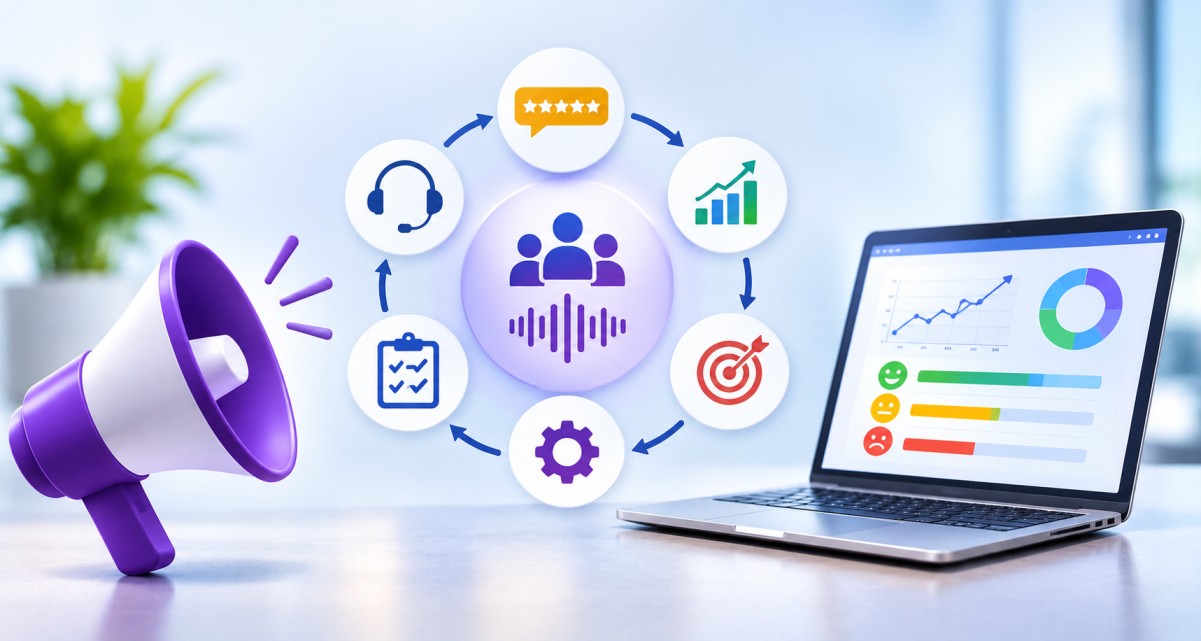
Building a successful VoC program requires a clear purpose, suitable feedback channels, meaningful measurement, and a process for acting on customer insights. The following steps provide a practical framework.
Step 1: Define Clear Objectives for Your VoC Program
Before launching surveys or purchasing feedback software, determine what the business wants to understand and improve.
Some organizations may want to reduce customer complaints after purchase. Others may focus on improving onboarding, increasing customer satisfaction, understanding product usability, or identifying reasons customers do not return.
Choose objectives that connect directly to business priorities. For example, if customers frequently contact support after purchasing a product, the program could investigate whether product instructions, setup processes, or initial guidance need improvement.
Set measurable targets where appropriate, such as reducing recurring complaints, improving customer satisfaction scores, or increasing the percentage of feedback cases resolved within an agreed timeframe.
It is equally important to establish ownership. Customer experience teams may manage the program, but product, operations, sales, and support teams should contribute wherever their processes influence the customer experience.
Step 2: Map the Customer Journey After Purchase
Customer feedback is most useful when it is connected to a specific experience. Mapping the post-purchase journey helps businesses identify the moments when customer expectations are most likely to change.
Consider a typical journey:
- Purchase confirmation: Was the ordering or payment process clear?
- Delivery or access: Did the customer receive the product or service as expected?
- Onboarding and setup: Could the customer begin using it without unnecessary difficulty?
- Initial usage: Did the product deliver the expected value?
- Customer support: Was assistance accessible and effective when needed?
- Continued usage: Does the customer remain satisfied over time?
- Renewal or repurchase: What influences the decision to continue the relationship?
Not every business needs feedback at every stage. A retailer selling household products may priorities delivery and product quality, while a software company may focus on onboarding, usability, and ongoing support.
Select the touchpoints that matter most to your customers and business objectives. This makes the program more relevant and reduces unnecessary survey requests.
Step 3: Choose the Right Customer Feedback Channels
Customers should be able to share their experiences through convenient channels. Depending on the audience and context, these may include email surveys, SMS links, website forms, QR codes, in-person feedback, or feedback requests within a digital product.
Each channel serves a different purpose.
- Email surveys are useful for collecting detailed feedback after a purchase or service interaction.
- SMS surveys can capture short responses soon after a customer experience.
- QR code surveys allow customers to provide feedback without navigating a lengthy process.
- Website surveys help businesses understand digital experiences and identify usability issues.
- In-person feedback can capture immediate reactions in retail stores, service centers, and other physical locations.
The objective is not to use every available channel. It is to choose the channels that fit the customer journey and make participation straightforward.
A customer feedback platform such as piHappiness supports multiple collection methods, including email, SMS, QR codes, personal links, and anonymous links. Its reporting and survey features can help businesses consolidate responses and review customer insights.
Step 4: Ask Questions That Generate Useful Insights
A survey is only as useful as the information it collects. Broad questions may provide a general satisfaction score, but they often fail to explain what went well or what needs attention.
Use a combination of rating questions and open-ended questions to understand both the outcome and the reason behind it.
For example:
- How satisfied are you with your recent purchase?
- Did the product meet your expectations?
- How easy was it to start using the product?
- What could we have done to improve your experience?
- Is there anything that prevented you from getting the expected value from your purchase?
Keep surveys concise and focused on the experience you want to evaluate. Avoid combining several unrelated questions into one or asking customers to provide information the business already has.
Where appropriate, use follow-up questions based on previous answers. A customer who reports difficulty with setup, for instance, could be asked which part of the process caused the problem.
Open-ended responses are particularly valuable because they allow customers to describe experiences in their own words. These comments often reveal issues that predefined answer choices overlook.
Step 5: Select the Right Metrics to Measure Customer Experience
A VoC program needs consistent measurements to track performance and identify changes over time. However, no single metric can explain the entire customer experience.
Three commonly used measures are:
Customer Satisfaction Score (CSAT): Measures how satisfied customers are with a product, service, or interaction. It is useful for evaluating specific experiences, such as delivery, onboarding, or customer support.
Net Promoter Score (NPS): Measures customers’ willingness to recommend a business, product, or service. It can help assess customer advocacy, but the score alone does not explain why customers feel that way.
Customer Effort Score (CES): Measures how easy or difficult customers find a particular interaction, such as resolving an issue or completing a purchase.
Use these metrics according to the questions your business needs to answer. A high satisfaction score after delivery does not necessarily mean customers will find the product easy to use several weeks later.
Combine scores with written comments, complaint categories, response rates, repeat purchase behavior and relevant operational measures. This provides a more complete picture of customer experience.
Step 6: Analyze Feedback and Identify Recurring Patterns
Collecting responses is only the beginning. Businesses must examine the feedback to understand the causes of customer satisfaction and dissatisfaction.
Start by grouping comments into meaningful themes, such as product quality, delivery delays, usability, pricing, communication, or support responsiveness. Compare these themes across customer groups, products, locations, and stages of the customer journey where relevant.
Step 7: Close the Feedback Loop With Customers
One of the most important parts of an effective Voice of Customer program is closing the feedback loop. This means acknowledging customer feedback, responding to concerns when appropriate, and using the information to improve the experience.
Consider a customer who reports that a newly purchased product is difficult to set up. If the business simply records the complaint, the customer may feel ignored. If the support team contacts the customer, provides assistance, and investigates the underlying problem, the feedback becomes an opportunity to improve the relationship.
A practical feedback-handling process should include:
- Assigning each actionable issue to a responsible team.
- Setting appropriate response and resolution targets.
- Prioritizing urgent or recurring problems.
- Informing customers about the steps being taken when appropriate.
- Recording outcomes and checking whether the issue has been resolved.
Not every suggestion can be implemented, and not every complaint will have an immediate solution. Clear communication is still valuable because it demonstrates that customer opinions are being considered.
Teams should also share recurring insights with product managers, operations leaders, and senior decision-makers. This helps prevent the same problems from repeatedly affecting new customers.
Step 8: Use Customer Insights to Drive Continuous Improvement
A VoC program should lead to changes that customers can experience, not just reports that management reviews. Once a recurring issue has been identified, the business should decide what action to take, who will be responsible, and how the outcome will be evaluated.
Suppose a subscription software company discovers that customers are dissatisfied with the time required to understand its product after purchase. The company might introduce guided onboarding, improve its help documentation, or offer a welcome session for new users.
After implementing the changes, the team can collect feedback from subsequent customers to determine whether the experience has improved. If the problem persists, the business may need to investigate further.
This process creates a continuous improvement cycle:
- Collect feedback from relevant customer touchpoints.
- Analyze responses to identify recurring problems.
- Priorities improvements according to customer impact and business objectives.
- Implement changes and communicate them to relevant teams.
- Measure the results and refine the approach.
Step 9: Use Technology to Manage Feedback Efficiently
As businesses grow, managing customer feedback through spreadsheets, separate survey tools, and disconnected reports can become difficult. Responses may be overlooked, recurring problems may go unnoticed, and teams may struggle to determine which issues require immediate attention.
Customer feedback software can help centralize information and make it easier to monitor trends, review responses, and coordinate follow-up actions.
When evaluating a platform, consider whether it supports:
- Multiple feedback collection channels.
- Customizable surveys and relevant customer experience metrics.
- Dashboards and reporting tools.
- Notifications for negative or urgent feedback.
- Feedback categorization and trend analysis.
- Case management and issue assignment.
- Integrations with existing business applications.
- Appropriate access controls and data protection measures.
For example, piHappiness provides feedback collection, survey analytics, reporting, notifications, and case management capabilities that businesses can use to organize customer feedback and support follow-up processes. The features selected should depend on the organisation’s requirements, customer journey, and operational workflows.
Common Mistakes to Avoid When Building a VoC Program
Even well-intentioned customer feedback initiatives can lose effectiveness when the process is poorly designed.
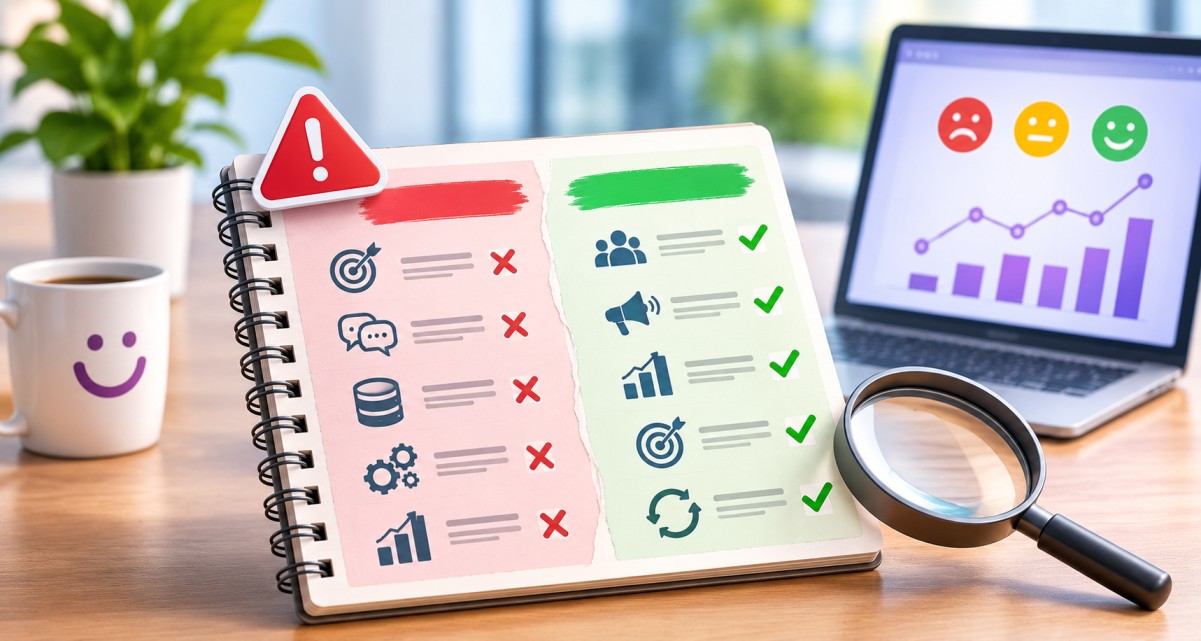
Collecting too much feedback: Sending surveys after every interaction can lead to survey fatigue. Contact customers at meaningful moments and keep questions relevant.
Focusing only on scores: Satisfaction ratings provide useful indicators, but they rarely explain the underlying causes of an experience. Review written feedback and operational information alongside numerical results.
Ignoring negative responses: Negative feedback can reveal weaknesses in products, communication, and service delivery. Establish a clear process for investigating and addressing recurring concerns. can reveal weaknesses in products, communication, and service delivery. Establish a clear process for investigating and addressing recurring concerns. can reveal weaknesses in products, communication, and service delivery. Establish a clear process for investigating and addressing recurring concerns. can reveal weaknesses in products, communication, and service delivery. Establish a clear process for investigating and addressing recurring concerns.
Failing to assign responsibility: If no team owns the next step, important insights can remain unresolved. Give actionable feedback to a clear owner and appropriate follow-up timeline. timeline. timeline. timeline.
Treating VoC as a one-time project: Customer expectations change as products, services, and markets evolve. Review the program regularly and adjust it as new patterns emerge.
Avoiding these mistakes helps businesses create a feedback process that remains relevant, manageable, and connected to measurable improvements.
Building an effective Voice of Customer program requires more than asking customers whether they are satisfied. Businesses need to understand the experiences behind those responses, identify recurring problems, and turn customer insights into meaningful improvements.
From mapping post-purchase interactions and selecting the right feedback channels to measuring customer satisfaction and closing the feedback loop, every stage should contribute to a clearer understanding of customer needs. When feedback is connected to action, organizations are better positioned to improve product experiences, strengthen customer relationships, and make informed decisions.
However, managing this process becomes more challenging as customer interactions increase across different channels. A structured feedback management approach can help businesses organize responses, identify patterns, and ensure that important concerns receive appropriate attention.
piHappiness helps businesses collect and analyze customer feedback through its customer experience and survey software. With features that support multichannel feedback collection, reporting, customer satisfaction measurement, and case management, piHappiness can help teams build a more organized approach to understanding customer experiences.
Frequently Asked Questions
- What is a Voice of Customer program?
A Voice of Customer program is a structured approach to collecting, analyzing, and acting on customer feedback. It helps businesses understand customer expectations, identify recurring problems, and improve products, services, and customer experiences.
- Why is a VoC program important after a purchase?
Post-purchase feedback helps businesses understand whether customers can use a product successfully, receive the expected value, and obtain appropriate support. It can reveal problems that sales figures alone may not identify.
- What are the most effective ways to collect customer feedback?
Common methods include email surveys, SMS surveys, website forms, QR codes, in-person feedback, customer interviews, and support interaction reviews. The right method depends on the customer journey and the type of information the business needs.
- Which metrics should businesses use to measure customer experience?
CSAT, NPS, and CES are widely used customer experience metrics. Businesses can complement these with response rates, issue resolution times, recurring complaint rates, and customer retention measures.
- How often should a business collect customer feedback?
Feedback frequency depends on the product, service, and customer interaction. Businesses should collect feedback at meaningful touchpoints, such as after delivery, onboarding, support resolution, or a suitable period of product usage, without overwhelming customers.
- How does customer feedback software help with a VoC program?
Customer feedback software can centralize survey responses, support reporting and trend analysis, and help teams organize follow-up actions. Its value depends on how effectively the business uses the insights to improve customer experiences.
- What is the difference between a customer survey and a VoC program?
A customer survey is one method of collecting feedback. A VoC program is the broader process that includes feedback collection, analysis, prioritization, action, and measurement of the resulting improvements.