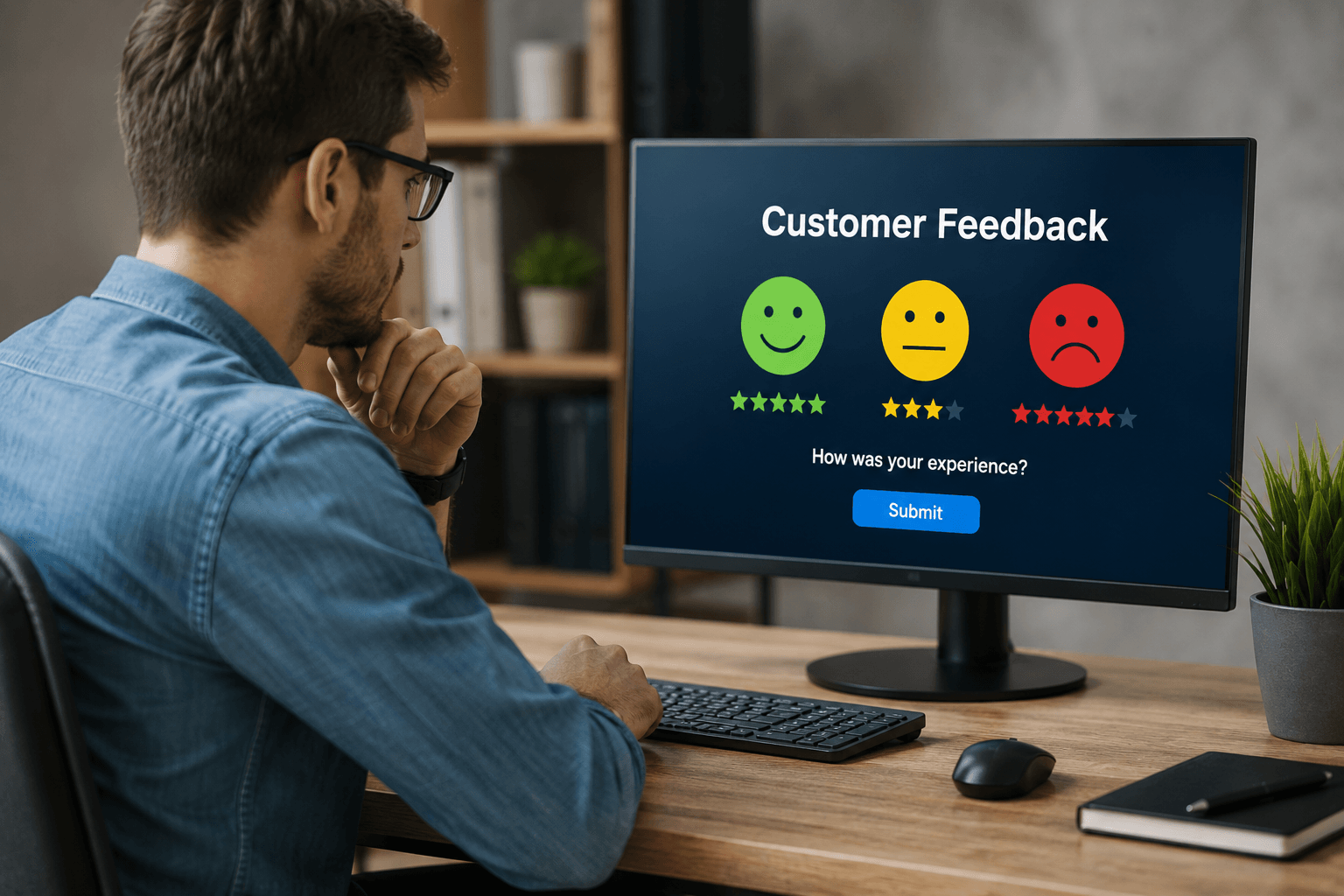
How to Respond to Negative Customer Feedback Professionally
Negative customer feedback is inevitable for every business. Even organizations that deliver exceptional products and services occasionally receive complaints, critical reviews, or dissatisfied customer comments. What separates great companies from average ones is not whether they receive negative feedback, but how they respond to it.
A professional response can rebuild trust, strengthen customer relationships, and even turn unhappy customers into loyal advocates. On the other hand, defensive or delayed responses can damage a company’s reputation and lead to customer churn.
In this guide, we’ll explore how to respond to negative customer feedback professionally and why effective feedback management is an essential part of Customer Experience Management.
Why Negative Customer Feedback Matters
Many businesses view negative feedback as a problem. In reality, it is one of the most valuable sources of customer insight.
Negative feedback helps businesses:
- Identify service gaps
- Improve products
- Enhance customer experience
- Prevent future complaints
- Build stronger customer relationships
According to the Qualtrics Experience Management Institute, organizations that actively listen to customer feedback are better positioned to improve customer satisfaction and long term loyalty.
Rather than avoiding criticism, successful businesses use it as an opportunity to improve.
Stay Calm Before Responding
Receiving a negative review or complaint can feel personal, especially for small businesses.
However, emotional responses often make situations worse.
Before replying:
- Read the feedback carefully.
- Understand the customer’s concern.
- Verify the facts internally.
- Take time to prepare a thoughtful response.
Professionalism begins with emotional control.
Respond Promptly
Customers appreciate businesses that acknowledge concerns quickly.
A delayed response may signal that the company does not value customer feedback.
Timely responses demonstrate:
- Accountability
- Transparency
- Commitment to customer satisfaction
Even if a complete solution is not immediately available, acknowledge the concern and communicate that the issue is being investigated.
Thank the Customer for Their Feedback
It may seem counterintuitive, but every response should begin by thanking the customer.
For example:
“Thank you for sharing your experience with us.”
This simple statement shows respect and demonstrates that the business values customer opinions.
Customers who feel heard are often more willing to continue the conversation.
Acknowledge the Customer’s Experience
One common mistake businesses make is becoming defensive.
Instead of arguing, acknowledge how the customer feels.
Examples include:
- “We’re sorry to hear about your experience.”
- “We understand your frustration.”
- “Thank you for bringing this to our attention.”
Acknowledging emotions does not necessarily mean admitting fault.
It simply demonstrates empathy.
Apologize Sincerely
If the business made a mistake, offer a genuine apology.
A good apology should be:
- Honest
- Respectful
- Professional
- Focused on the customer
Avoid statements that sound dismissive or insincere.
Instead of:
“We’re sorry if you felt disappointed.”
Use:
“We sincerely apologize that your experience did not meet your expectations.”
Customers recognize authentic accountability.
Offer a Solution
A professional response should move beyond apologies and focus on resolving the issue.
Possible solutions include:
- Replacement products
- Refunds
- Additional support
- Follow up conversations
- Service recovery
Customers appreciate businesses that take meaningful action rather than offering generic responses.
Whenever possible, explain the next steps clearly.
Take Sensitive Conversations Offline
Public review platforms are important for transparency, but detailed customer issues are often better handled privately.
Invite customers to continue the conversation through:
- Phone
- Customer support
- Direct messages
For example:
“We’d appreciate the opportunity to understand your experience better. Please contact our support team so we can assist you directly.”
This protects customer privacy while allowing more personalized support.
Never Argue with Customers
Public arguments rarely benefit businesses.
Even when customers provide inaccurate information, responding aggressively can damage your brand reputation.
Instead:
- Remain respectful.
- Clarify facts politely.
- Focus on finding solutions.
- Maintain professionalism.
Remember that future customers may read your response as carefully as the original review.
Personalize Every Response
Avoid copying the same response to every customer.
Generic replies often appear automated and insincere.
Whenever possible:
- Address the customer by name.
- Reference the specific issue.
- Mention relevant details.
- Offer personalized assistance.
Customers appreciate businesses that treat them as individuals.
Learn from Recurring Feedback
One complaint may represent an isolated incident.
Repeated complaints usually indicate a larger operational issue.
Businesses should regularly analyze customer feedback to identify patterns involving:
- Product quality
- Customer service
- Delivery delays
- Website usability
- Communication problems
Addressing recurring issues creates long term improvements across the customer journey.
Use AI to Analyze Customer Feedback
Modern Customer Experience Management platforms increasingly use Artificial Intelligence to analyze customer feedback.
AI can:
- Detect customer sentiment
- Identify recurring themes
- Prioritize urgent issues
- Predict customer churn
- Generate actionable insights
Instead of manually reviewing thousands of comments, organizations can quickly identify the areas requiring immediate attention.
AI enables businesses to respond faster while continuously improving customer experience.
Train Employees to Handle Feedback Professionally
Every customer facing employee should understand how to respond professionally.
Training should cover:
- Active listening
- Empathy
- Conflict resolution
- Professional communication
- Escalation procedures
Consistent responses strengthen customer confidence and reinforce brand values.
Turn Negative Feedback into Positive Experiences
Some of the strongest customer relationships develop after problems are resolved successfully.
When businesses respond professionally:
- Customers regain trust.
- Loyalty increases.
- Word of mouth improves.
- Public perception strengthens.
A well handled complaint often creates a stronger relationship than a problem free transaction.
Best Practices for Responding to Negative Customer Feedback
To summarize, businesses should always:
- Respond promptly.
- Stay calm and professional.
- Thank customers for their feedback.
- Show empathy.
- Apologize sincerely when appropriate.
- Offer practical solutions.
- Continue sensitive discussions privately.
- Learn from recurring feedback.
- Use AI to analyze customer insights.
- Continuously improve customer experience.
These practices strengthen customer relationships while protecting brand reputation.
Conclusion
Negative customer feedback should never be viewed as a threat. Instead, it should be seen as an opportunity to improve products, services, and customer relationships.
Professional responses demonstrate accountability, empathy, and a genuine commitment to customer satisfaction. Businesses that consistently respond thoughtfully are more likely to build trust, improve customer loyalty, and enhance their overall reputation.
By combining timely communication, structured feedback management, and AI driven insights, organizations can transform customer complaints into valuable opportunities for continuous improvement.
Improve Customer Feedback Management with PiHappiness
Collect, analyze, and respond to customer feedback with confidence using PiHappiness. Measure customer satisfaction, monitor sentiment, identify improvement opportunities, and deliver exceptional customer experiences through intelligent Customer Experience Management solutions.
Visit https://www.pihappiness.com to discover how PiHappiness helps businesses turn customer feedback into meaningful business growth.