Net Promoter Score (NPS) is one of the most widely used metrics for understanding customer loyalty. It helps businesses measure how likely customers are to recommend their products, services, or brand to others.
However, knowing your NPS score does not automatically explain what customers think, why they feel that way, or what the business should do next.
A score of 35 might indicate that promoters outnumber detractors. But are customers becoming more loyal? Are service problems affecting specific locations? Are dissatisfied customers considering leaving? And which improvements would make the biggest difference?
These are the questions management needs to answer.
Looking at NPS beyond the score means moving from measuring customer loyalty to understanding the experiences that influence it. By asking the right follow-up questions, management can identify customer pain points, uncover growth opportunities, and prioritize improvements.
In this article, we explore six important questions every management team should ask when reviewing NPS results and explain how to turn those insights into meaningful business decisions.
What Does NPS Tell You – and What Does It Miss?
Net Promoter Score measures customers’ willingness to recommend a company, product, or service.

Customers are typically asked:
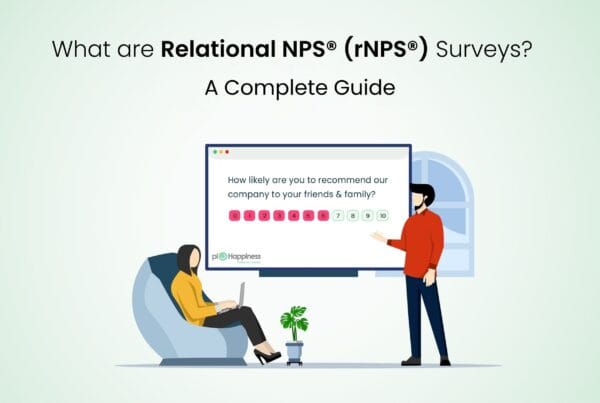
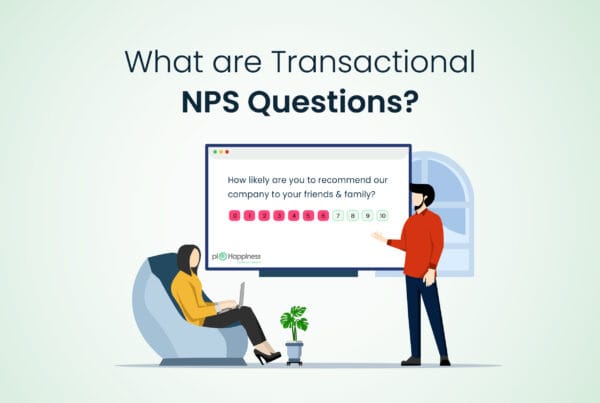
“On a scale of 0 to 10, how likely are you to recommend us to a friend or colleague?”
Responses are grouped into three categories:
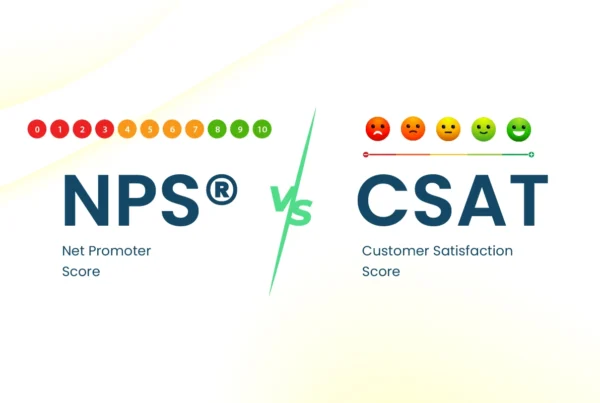
- Promoters (9–10): Customers who are most likely to recommend the business.
- Passives (7–8): Customers who are relatively satisfied but may not be enthusiastic advocates.
- Detractors (0–6): Customers who may be dissatisfied and less likely to recommend the business.
NPS is calculated by subtracting the percentage of detractors from the percentage of promoters.
For example, if a business receives 60% promoter responses and 20% detractor responses, its NPS is 40.
The score provides a useful indicator of customer loyalty. However, it does not explain the reasons behind the responses.
Two companies could have the same NPS but very different customer experiences. One might have problems with delivery, while another might struggle with product usability or customer support.
Management needs additional context to understand these differences. This is why reviewing how NPS connects customer loyalty with business growth can help put the metric into a broader business perspective.
1. Why Are Customers Giving Us This Score?

The first question management should ask is simple:
Why are customers giving us their current NPS ratings?
The score tells you how customers responded. Their comments can help explain why.
For example, a customer may give a score of 4 because a product repeatedly fails. Another customer may give the same score because support takes too long to respond.
Although the ratings are identical, the solutions are different.
The product issue may require technical improvements, while the support issue may require better staffing, training, or ticket routing.
What management should investigate
- What are the most common reasons behind detractor scores?
- What do promoters appreciate most?
- What prevents passives from becoming promoters?
- Which complaints appear repeatedly?
- Are customers describing isolated incidents or recurring problems?
How to find the answers
Combine NPS ratings with an open-ended question such as:
“What is the main reason for your score?”
Then categorize responses into themes such as product quality, pricing, support, delivery, usability, and communication.
This helps management identify the experiences that influence customer loyalty.
For a deeper understanding, businesses can use customer feedback analysis methods to organize quantitative scores and qualitative comments into actionable insights.
2. Are We Losing Customer Loyalty or Just Seeing a Temporary Dip?
A single NPS result does not always reveal the direction of customer loyalty.
Management should ask:
Is our NPS improving, declining, or remaining stable over time?
Consider this example:
| Month | NPS |
| January | 42 |
| February | 39 |
| March | 34 |
| April | 28 |
The latest score is 28, but the more important finding is the consistent decline.
This pattern suggests that management should investigate what has changed during the period.
Possible causes include:
- Declining service quality
- Longer waiting times
- Product or service changes
- Repeated billing problems
- Increased customer effort
- Changes in customer expectations
- Poor complaint resolution
However, trends should be interpreted carefully. Changes in survey response rates, customer segments, or survey timing can also affect the results.
What management should investigate
- When did the decline begin?
- Which customer groups are driving it?
- Did any operational changes occur?
- Are particular products or locations affected?
- Is the decline visible in other customer experience metrics?
Comparing NPS with CSAT, complaint rates, and customer retention data can help distinguish a temporary fluctuation from a more persistent problem.
The objective is not simply to report a lower score. It is to understand what changed and why.
Which Customer Groups Are Driving Our NPS?
An overall NPS can hide important differences between customer groups.
For example, a company might have a healthy overall score while new customers report poor onboarding experiences.
Similarly, customers from one location might be highly satisfied while another location receives repeated complaints.
Management should ask:
Which customer segments, locations, products, or touchpoints are contributing most to our NPS results?
Compare NPS across meaningful segments
Businesses can analyze results by:
- New versus returning customers
- Product or service
- Geographic location
- Customer support channel
- Customer tenure
- Purchase type
- Customer account segment
- Customer journey stage
Imagine a company with the following results:
| Customer Segment | NPS |
| New customers | 18 |
| Returning customers | 46 |
| Premium customers | 51 |
| Customers using self-service support | 12 |
The results suggest that onboarding and self-service support deserve further investigation.
They do not prove the exact cause, but they help management focus its analysis.
What management should investigate
- Are new customers experiencing avoidable friction?
- Are some locations delivering inconsistent service?
- Are specific products generating more detractors?
- Do particular customer groups need additional support?
- Are differences explained by sample size or customer mix?
Segment analysis makes NPS more actionable because it identifies where improvement efforts may have the greatest value.
4. What Are We Doing About Detractors?

Identifying detractors is useful only if the business responds appropriately.
Management should ask:
How quickly are we following up with dissatisfied customers, and are their concerns being resolved?
A low NPS rating may indicate a problem that can be corrected through a direct conversation, technical fix, billing adjustment, or service recovery process.
However, not every detractor requires the same response.
A customer reporting a minor inconvenience may need a simple clarification. A customer who has experienced repeated failures may require escalation and a more detailed investigation.
Establish a clear follow-up process
A practical process includes:
- Identify detractor responses.
- Review the customer’s comments and relevant history.
- Prioritize the issue based on urgency and impact.
- Assign responsibility to the appropriate team.
- Contact the customer where appropriate.
- Track the resolution.
- Record recurring issues for further analysis.
Management should monitor more than the number of customers contacted.
Useful measures include response time, resolution rate, repeat complaints, and satisfaction after resolution.
piHappiness provides NPS and negative-score alert capabilities that can help teams identify dissatisfied respondents and route important feedback for attention. Explore the piHappiness customer experience features for more information.
A detractor response should create an opportunity to understand the problem, not simply another entry in a report.
5. What Prevents Passives From Becoming Promoters?
Passives are customers who give NPS ratings of 7 or 8.
They are not necessarily dissatisfied, but they may lack a strong reason to recommend the business.
Management should ask:
What would make our passive customers more confident in choosing and recommending us?
The answer may involve relatively small improvements.
For example, customers might appreciate the product but find the onboarding process confusing. They may like the service but want more consistent communication. Or they may be satisfied with the experience but see little difference between the business and its competitors.
What management should investigate
- What do passives like about the current experience?
- What is missing from their experience?
- Which problems prevent stronger advocacy?
- Are there recurring requests for improvements?
- Do passives behave differently from promoters over time?
A follow-up question can help:
“What is one thing we could improve to make your experience better?”
Management can then compare passive responses with promoter feedback.
This comparison may reveal the experiences that distinguish an acceptable customer journey from an excellent one.
The objective is not to pressure customers into giving higher ratings. It is to identify genuine opportunities to improve their experience.
6. Which Improvements Will Have the Greatest Business Impact?
The final question moves the discussion from analysis to decision-making.

Which customer experience improvements should we prioritize first?
NPS analysis may reveal many potential issues, but businesses rarely have unlimited time or resources to address them all at once.
Management needs to prioritize improvements based on customer impact, business risk, urgency, and feasibility.
Build an improvement priority list
For each major issue, consider:
- How frequently does it occur?
- How many customers are affected?
- How serious is the impact?
- Does it influence retention or repeat purchases?
- Can the business address it quickly?
- How will success be measured?
For example:
| Issue | Customer Impact | Priority |
| Repeated payment failures | High | Immediate |
| Slow support responses | High | High |
| Confusing product instructions | Medium | Medium |
| Request for an additional feature | Variable | Evaluate |
This approach helps management distinguish urgent service failures from longer-term improvement opportunities.
Connect actions to measurable outcomes
Every major improvement should have an owner, a target, and a review date.
For example:
Problem: Customers report long support wait times.
Action: Improve ticket routing and staffing during peak periods.
Measure: Track response time, repeat contacts, CSAT, and NPS over the following review period.
The business can then evaluate whether the change improved the experience.
An increase in NPS alone does not prove that one action caused the improvement. Management should also consider operational changes, customer mix, sample size, and other factors.
The goal is to create a disciplined process that connects customer feedback to measurable business improvement.
How Management Can Build an NPS Review Framework
To make NPS more useful, management should review it as part of a regular customer experience process rather than treating it as an isolated KPI.
A practical review can follow five steps.
 Step 1: Review the score and trend
Understand the current NPS and how it compares with previous periods.
Step 2: Identify the main drivers
Analyze comments, complaint categories, and customer segments.
Step 3: Investigate high-impact issues
Determine which problems affect the largest number of customers or create the greatest risk.
Step 4: Assign actions and ownership
Give each improvement a responsible owner, deadline, and success measure.
Step 5: Measure the outcome
Review whether the action improved customer experience and whether the original issue has become less frequent.
This creates a continuous cycle:
Measure → Understand → Prioritize → Act → Review
It also helps management move beyond score comparisons toward better operational decisions.
Common NPS Mistakes Management Should Avoid
Even when businesses collect NPS regularly, several mistakes can limit its value.

Focusing only on the overall score
An overall result may hide serious problems in individual locations, customer groups, or touchpoints.
Ignoring customer comments
A number shows the result, but comments can help explain the reasons behind it.
Contacting detractors without resolving the underlying issue
A follow-up call cannot replace the operational changes needed to prevent recurring problems.
Treating passives as unimportant
Passives may reveal gaps between satisfactory service and experiences that build stronger loyalty.
Setting targets without an action plan
A target such as increasing NPS by 10 points is less useful without a clear explanation of how customer experience will improve.
Measuring results without assigning ownership
Every important insight should have a clear next step and a responsible team.
Businesses can also compare promoter, passive, and detractor behavior to understand the differences between these groups. piHappiness explores these distinctions in its guide to the anatomy of promoters, passives, and detractors.
NPS is a useful measure of customer loyalty, but its real value comes from what businesses learn after reviewing the score.
Management should ask why customers gave their ratings, whether loyalty is changing, which groups are affected, how detractors are handled, what passives need, and which improvements deserve priority.
These six questions help connect customer sentiment with operational decisions.
Instead of focusing exclusively on whether NPS increased or decreased, businesses can investigate the experiences behind the result and decide what needs to change.
The most effective NPS programs do not end with a dashboard.
They lead to better conversations, clearer ownership, targeted improvements, and follow-up measurement.
The goal is not simply to achieve a higher NPS. It is to understand customers better and give them more reasons to stay, return, and recommend the business.
Frequently Asked Questions
- What does NPS tell management?
NPS indicates customers’ willingness to recommend a company, product, or service. It provides a useful view of customer loyalty but does not independently explain the reasons behind customer ratings.
- Why should management look beyond the NPS score?
Looking beyond the score helps identify customer pain points, understand changes in loyalty, compare customer segments, and prioritize improvements.
- What are the six questions management should ask about NPS?
Management should ask why customers gave their scores, whether loyalty is changing, which groups drive the results, how detractors are handled, what prevents passives from becoming promoters, and which improvements should be prioritized.
- How often should businesses review NPS?
The frequency depends on the business and feedback volume. Transactional NPS may be monitored continuously, while relationship NPS can be reviewed at regular intervals appropriate to the customer lifecycle.
- What is the difference between promoters, passives, and detractors?
Promoters give ratings of 9–10, passives give 7–8, and detractors give 0–6 on the standard 0–10 NPS scale.
- How can businesses understand why customers give low NPS scores?
They can ask an open-ended follow-up question, analyze customer comments, review previous interactions, and categorize feedback by issue type.
- Should management contact every detractor?
Not necessarily in the same way. Follow-up should be guided by the nature and severity of the feedback, customer expectations, available contact permissions, and the organization’s service recovery process.
- How can businesses improve passive customer experiences?
Businesses can analyze what passives value, identify friction in their journeys, and address the gaps that prevent them from becoming stronger advocates.
- Can NPS predict customer retention?
NPS can provide useful information about loyalty and recommendation intent, but it should not be treated as a guaranteed predictor of retention. Businesses should compare it with actual renewal, repeat-purchase, and churn data.
- What other metrics should be reviewed alongside NPS?
CSAT, CES, complaint rates, resolution times, repeat purchases, renewal rates, and churn can help provide a more complete view of customer experience and business outcomes.
- How can management turn NPS insights into action?
Management can identify recurring themes, prioritize issues by impact, assign owners, establish deadlines, and track whether the resulting changes improve customer experience.
- What is the biggest mistake businesses make with NPS?
A common mistake is treating NPS as the final result rather than the starting point for investigation, customer follow-up, and continuous improvement.