How do you know whether your customers are genuinely happy with your business? Are they satisfied enough to recommend your products or services to others? Or are they simply continuing to purchase because they have not yet found a better alternative?
These are important questions every business should consider when building long-term customer relationships.
In today’s competitive marketplace, customer expectations are constantly changing. Customers expect quality products, reliable services, personalised experiences and quick support. A single negative interaction can influence their perception of a brand and encourage them to explore competitors.
This makes understanding customer loyalty an essential part of business growth. However, measuring customer loyalty through assumptions or occasional customer reviews is not enough. Businesses need a structured approach to understand customer perceptions and identify opportunities for improvement.
This is where Net Promoter Score (NPS) becomes valuable.
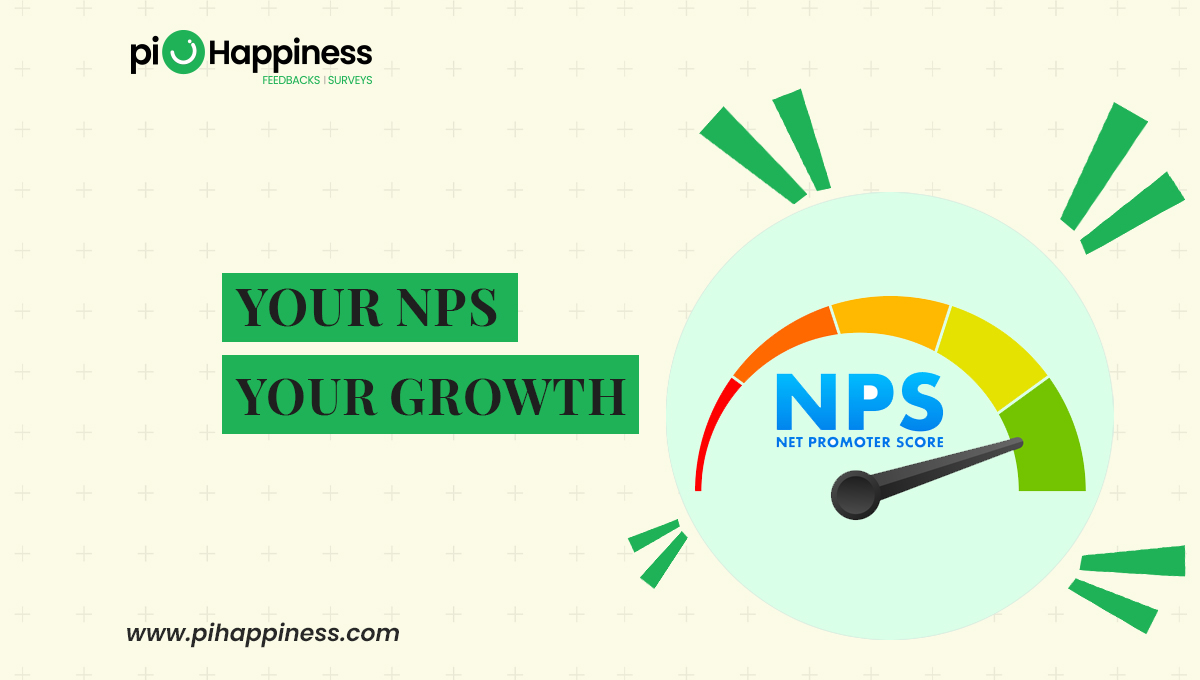
Net Promoter Score is a widely used customer experience metric that measures how likely customers are to recommend a company, product or service to others. It helps businesses understand customer advocacy, identify dissatisfied customers and evaluate the overall perception of their brand.
Whether you operate an e-commerce store, healthcare organisation, bank, hotel, educational institution, SaaS company or retail business, NPS can provide useful insights into customer relationships.
What Is Net Promoter Score (NPS)?
Net Promoter Score (NPS) is a customer experience metric used to measure customers’ willingness to recommend a company, product or service to friends, colleagues or family members.

It is based on a simple question:
“How likely are you to recommend our company, product or service to a friend or colleague?”
Customers answer this question using a numerical scale from 0 to 10, where:
- 0 means not at all likely to recommend.
- 10 means extremely likely to recommend.
Based on their responses, customers are divided into three categories: Promoters, Passives and Detractors.
NPS helps businesses understand the balance between customers who actively recommend their brand and those who are less satisfied or unlikely to recommend it.
Unlike metrics that measure satisfaction with a single interaction, NPS is commonly used to understand broader customer advocacy and perceptions of a business.
It can be applied across different industries and business models, making it a useful metric for organisations that want to understand their customer relationships.
Understanding the Three Categories of NPS

To understand how NPS works, it is important to know the three customer categories.
- Promoters (Scores 9–10)
Promoters are customers who give a score of 9 or 10.
They are generally enthusiastic about a business and are more likely to recommend its products or services to others.
For example, a customer who consistently receives excellent service from an online shopping platform may recommend it to friends and family.
Promoters can contribute to business growth through positive recommendations, repeat purchases and favourable brand advocacy.
However, a high score does not guarantee that a customer will always remain loyal. Businesses should continue delivering positive experiences to maintain these relationships.
- Passives (Scores 7–8)
Passives are customers who give a score of 7 or 8.
They are generally satisfied but may not feel strongly enough about the business to recommend it.
For example, a customer may appreciate the quality of a product but feel that the delivery experience or customer support could be better.
Passives are particularly important because their experiences may reveal opportunities for improvement.
Businesses can understand what is missing from their experience and introduce improvements that make their services more valuable.
- Detractors (Scores 0–6)
Detractors are customers who give a score between 0 and 6.
They are less likely to recommend a business and may have experienced problems with its products, services or customer support.
For example, a customer who repeatedly experiences delayed deliveries and unresolved complaints may give a low NPS rating.
Detractors can provide valuable feedback about areas where a business is falling short.
Instead of ignoring negative responses, organisations should identify the underlying reasons, acknowledge customer concerns and take appropriate action.
How to Calculate Net Promoter Score (NPS)?
Calculating NPS is straightforward. Businesses need to determine the percentage of Promoters and Detractors among valid survey responses.
The formula is:
NPS = Percentage of Promoters − Percentage of Detractors
Passives are included in the total number of responses when calculating percentages, but they are not directly added or subtracted in the final calculation.
Step-by-Step NPS Calculation Example
Consider an online retail business that collects feedback from 100 customers.
The responses are distributed as follows:
| Customer category | Number of responses | Percentage |
| Promoters (9–10) | 50 | 50% |
| Passives (7–8) | 30 | 30% |
| Detractors (0–6) | 20 | 20% |
| Total | 100 | 100% |
Now apply the NPS formula:
NPS = 50% − 20%
NPS = +30
<badge color=”success”>Calculated NPS: +30</badge>
This means the business has an NPS of positive 30.
It indicates that the percentage of Promoters is 30 percentage points higher than the percentage of Detractors.
The result gives management a useful starting point for evaluating customer advocacy. However, the business should also review customer comments to understand why customers provided their ratings.
What Is the NPS Score Range?
NPS scores range from -100 to +100.
| NPS score | General interpretation |
| -100 | All respondents are Detractors |
| -50 | More Detractors than Promoters |
| 0 | Promoters and Detractors are equal |
| +30 | Promoters exceed Detractors |
| +50 | Strong positive advocacy balance |
| +100 | All respondents are Promoters |
A positive score means that Promoters outnumber Detractors, while a negative score means Detractors outnumber Promoters.
There is no single universal NPS benchmark that applies to every industry. A meaningful evaluation should consider industry, customer segment, survey methodology, geography and historical performance.
Why Is Net Promoter Score Important for Businesses?
Understanding customer perceptions is essential for improving products, services and customer relationships.
NPS provides a simple way to measure customer recommendation willingness and identify areas that require attention.
- Helps Measure Customer Loyalty
Customer loyalty is important for sustainable business growth.
NPS helps businesses understand whether customers are willing to recommend their brand to others.
For example, a hospitality business can use NPS to understand whether guests are likely to recommend its services after their stay.
This information can help management evaluate customer perceptions and identify opportunities to improve the guest experience.
- Identifies Customer Dissatisfaction
Low NPS responses can help businesses recognise customers who may have experienced negative interactions.
By analysing their feedback, organisations can identify recurring problems such as poor service quality, delayed responses, complicated processes or product-related concerns.
This provides an opportunity to address problems before they negatively affect more customer relationships.
- Supports Better Business Decisions
Customer opinions can reveal issues that may not be visible through sales figures or operational reports.
For example, a software company may have a growing subscriber base but receive negative feedback about product usability.
NPS responses and customer comments can help the company understand whether product improvements are necessary.
- Helps Improve Customer Retention
NPS can provide an indication of customer advocacy and help businesses identify customers who may require additional attention.
When combined with other information, such as customer complaints, engagement and renewal behaviour, it can support customer retention initiatives.
However, NPS alone cannot reliably predict whether an individual customer will leave.
- Strengthens Brand Reputation
Customers who have positive experiences may be more willing to recommend a business.
NPS helps organisations understand their customers’ willingness to advocate for the brand.
Businesses can use these insights to identify service improvements that may contribute to stronger customer relationships and positive word of mouth.
Different Types of Net Promoter Score Surveys
Businesses can use different NPS survey approaches depending on what they want to measure.
- Relationship NPS
Relationship NPS measures customers’ overall perception of a business or brand.
It is generally collected at planned intervals to understand how customers view their overall relationship with the organisation.
Example:
“How likely are you to recommend our company to a friend or colleague?”
- Transactional NPS
Transactional NPS measures customer recommendation willingness after a specific interaction or transaction.
For example, a bank may send an NPS survey after a customer completes a service request.
Similarly, an online retailer may collect feedback after an order is delivered.
This helps businesses understand customer perceptions of individual experiences.
- Employee Net Promoter Score (eNPS)
Employee Net Promoter Score measures employees’ willingness to recommend their organisation as a place to work.
A common question is:
“How likely are you to recommend this organisation as a place to work to a friend or colleague?”
eNPS is different from customer NPS because it focuses on employee advocacy rather than customer experiences.
Businesses should not confuse these two measurements when evaluating customer satisfaction.
Best Practices for Creating an Effective NPS Survey

Collecting NPS responses is only the beginning. Businesses must design surveys carefully to obtain meaningful feedback.
- Ask a Clear and Simple Question
The standard NPS question should be easy to understand.
Avoid using complicated wording or combining multiple questions that may confuse respondents.
- Choose the Right Survey Timing
Survey timing can influence the quality and relevance of feedback.
For transactional NPS, collect feedback shortly after the relevant interaction while the experience is still fresh.
For relationship NPS, choose a consistent schedule that allows customers sufficient time to evaluate their relationship with the business.
- Include an Open-Ended Follow-Up Question
A numerical score tells businesses how likely customers are to recommend them, but it does not explain why.
Consider adding a follow-up question:
“What is the main reason for your score?”
This allows customers to share their opinions, suggestions and concerns.
- Keep Surveys Short
Long surveys can discourage participation.
Start with the standard NPS question and include only relevant follow-up questions.
- Analyse Responses Regularly
Do not collect feedback and leave it unused.
Review NPS trends, customer comments and recurring concerns regularly to identify opportunities for improvement.
- Close the Feedback Loop
Businesses should acknowledge customer feedback, respond to concerns and communicate improvements where appropriate.
This demonstrates that customer opinions are valued and helps make feedback collection more meaningful.
Common NPS Mistakes Businesses Should Avoid

Although NPS is easy to calculate, incorrect implementation can lead to misleading conclusions.
Here are some common mistakes to avoid.
- Focusing Only on the Final Score
A high NPS does not automatically mean that every customer is satisfied.
Businesses should review individual responses and customer comments to understand the reasons behind the score.
- Ignoring Detractors
Negative feedback should not be overlooked. It may reveal important problems with products, services or customer support.
- Sending Too Many Surveys
Excessive survey requests can create survey fatigue and reduce response rates.
- Comparing Different Industries Without Context
An NPS score should not be interpreted using a universal benchmark. Differences in customer expectations, industries and survey methods can influence results.
- Ignoring Passives
Passives may not be actively dissatisfied, but their experiences may reveal opportunities to create stronger customer advocacy.
- Treating NPS as the Only Customer Experience Metric
NPS should be used alongside CSAT, CES, retention rate, complaint resolution data and other relevant business indicators.
- Collecting Feedback Without Taking Action
Customers may become frustrated if businesses repeatedly ask for feedback without addressing their concerns.
The ultimate purpose of NPS is not simply to generate a number. It is to understand customer perceptions and improve experiences.
Net Promoter Score is more than a simple customer feedback metric. It provides businesses with a structured way to understand customer advocacy, identify dissatisfaction and discover opportunities to improve customer experiences.
From retail and e-commerce to healthcare, banking, hospitality, education and SaaS, organisations can use NPS to understand how customers perceive their products and services.
However, calculating an NPS score is only the first step. The real value comes from analyzing customer comments, identifying recurring problems, addressing negative experiences and continuously improving business processes.
Businesses that listen to customers and take meaningful action can build stronger relationships and create more positive experiences.
This is where piHappiness can support your customer experience management strategy.
With capabilities such as multichannel feedback collection, customisable surveys, NPS and CSAT measurement, real-time dashboards, analytical reporting, notifications and case management, piHappiness helps businesses collect meaningful customer feedback and identify opportunities for improvement.
Frequently Asked Questions
- What is Net Promoter Score (NPS) in simple terms?
Net Promoter Score is a customer experience metric that measures how likely customers are to recommend a company, product or service to others. Customers respond on a scale of 0 to 10 and are classified as Promoters, Passives or Detractors.
- How is Net Promoter Score calculated?
NPS is calculated by subtracting the percentage of Detractors from the percentage of Promoters.
NPS = % Promoters − % Detractors
The final score ranges from -100 to +100.
- What is a good NPS score?
A positive NPS indicates that Promoters outnumber Detractors. However, what constitutes a good score depends on the industry, customer segment, geography and survey methodology. Businesses should compare their results with relevant industry benchmarks and historical performance.
- What is the difference between Promoters, Passives and Detractors?
Promoters give scores of 9–10 and are more likely to recommend a business. Passives give scores of 7–8 and are generally satisfied but less enthusiastic. Detractors give scores of 0–6 and are less likely to recommend the business.
- Why is NPS important for businesses?
NPS helps businesses understand customer advocacy, identify dissatisfaction and evaluate customer perceptions. It can support customer experience improvements and retention initiatives when combined with other business metrics.
- What is the difference between NPS and CSAT?
NPS measures customers’ willingness to recommend a business, while Customer Satisfaction Score (CSAT) measures satisfaction with a specific product, service or interaction. Both metrics provide different insights into customer experiences.
- What is the difference between NPS and eNPS?
NPS measures customer willingness to recommend a company, product or service. Employee Net Promoter Score (eNPS) measures employees’ willingness to recommend their organisation as a workplace.
- How frequently should businesses conduct NPS surveys?
The frequency depends on the business model and customer journey. Transactional NPS surveys can be conducted after important interactions, while relationship NPS surveys can be conducted periodically. Businesses should avoid sending excessive surveys.
- Can NPS be used across different industries?
Yes. NPS can be used by retail, healthcare, banking, hospitality, education, e-commerce, SaaS, telecommunications and other businesses to understand customer recommendation willingness.
- Can NPS help improve customer retention?
NPS can help identify dissatisfied customers and reveal areas that require improvement. When businesses act on feedback and combine NPS with other customer behaviour indicators, it can support customer retention strategies.