In today’s competitive business environment, understanding customer expectations is essential for building a successful and sustainable business. Whether an organisation operates in retail, healthcare, hospitality, education, banking, e-commerce, manufacturing, or technology, customer experience plays an important role in shaping its reputation and long-term growth.
Customers expect more than just good products or services. They want businesses to listen to their concerns, understand their requirements, respond to their questions, and continuously improve their experiences. A delayed response, poor customer support, complicated purchasing process, or unresolved complaint can influence how customers perceive a brand.
This is why collecting customer feedback should be an important part of every business strategy.
However, simply asking customers to leave reviews or complete surveys is not enough. Businesses need a structured process to collect feedback, analyse customer responses, identify problems, implement improvements, and communicate the actions taken. This continuous process is known as a Customer Feedback Loop.
A well-managed customer feedback loop helps organisations understand what customers appreciate, identify service gaps, improve customer satisfaction, and strengthen their online reputation. It also provides valuable insights that support better business decisions.
For example, an e-commerce company may discover that customers are dissatisfied with delivery updates, while a healthcare organization may receive feedback about appointment scheduling. Similarly, a restaurant may identify concerns about service speed, and a software company may discover that users need better technical assistance.
Each response provides an opportunity to improve.
With customer feedback and review management solutions such as PI Happiness, businesses can simplify feedback collection, monitor customer responses, and gain actionable insights to improve customer experiences.
In this guide, we will explore how to create an effective customer feedback loop, the best practices businesses should follow, important performance metrics, and how PI Happiness can support a more organized feedback management strategy.
What Is a Customer Feedback Loop and Why Does It Matter for Businesses?
A customer feedback loop is a continuous process through which businesses collect customer opinions, analyse their experiences, respond to concerns, and implement improvements based on the information received.
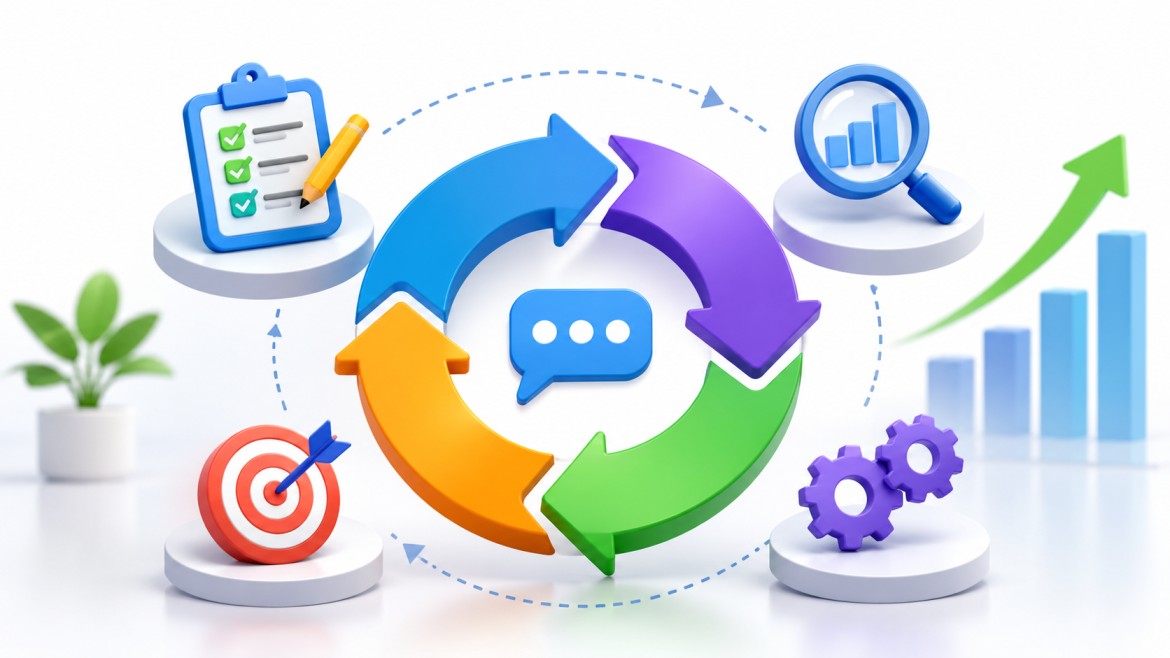
It creates a connection between customers and businesses by ensuring that customer opinions are considered when making operational and service-related decisions.
Unlike traditional feedback collection, which often ends after receiving a review or survey response, a feedback loop focuses on taking meaningful action.
Understanding the Customer Feedback Loop Process
A typical customer feedback loop consists of five important stages:
- Collect: Gather customer opinions through surveys, reviews, feedback forms, and other communication channels.
- Analyse: Evaluate customer responses to identify satisfaction levels, recurring concerns, and improvement opportunities.
- Act: Implement appropriate changes based on the feedback received.
- Respond: Communicate with customers, acknowledge their concerns, and explain relevant improvements.
- Improve: Continue monitoring customer experiences and repeat the process.
This process helps businesses move from simply collecting customer opinions to creating measurable service improvements.
Why Is a Customer Feedback Loop Important?
A structured feedback process offers several benefits across different industries.
Improves Customer Satisfaction: Understanding customer expectations helps businesses identify problems and improve products, services, and customer support.
Builds Customer Trust: Customers are more likely to feel valued when businesses acknowledge their concerns and take appropriate action.
Strengthens Brand Reputation: Genuine customer reviews provide useful information to potential customers who are evaluating a business.
Supports Customer Retention: Addressing recurring problems and improving experiences can encourage customers to maintain long-term relationships with a brand.
Helps Businesses Make Better Decisions: Customer feedback provides information that can help management prioritise improvements based on actual customer experiences rather than assumptions.
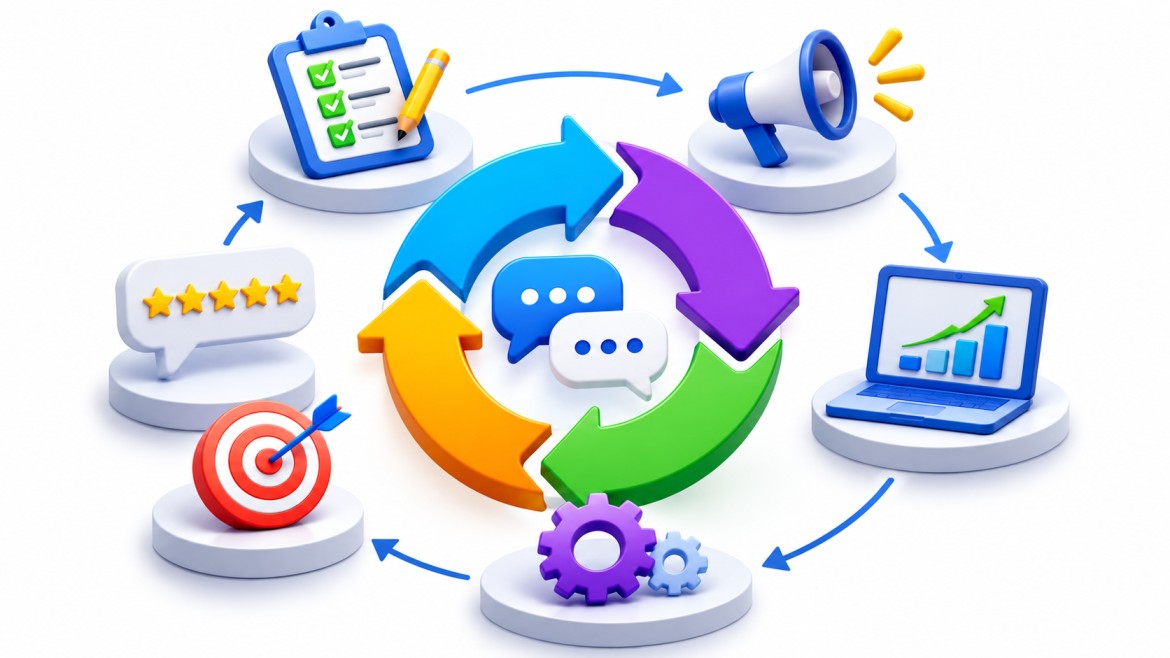
How to Create an Effective Customer Feedback Loop
Creating a successful customer feedback loop requires planning, suitable tools, employee involvement, and continuous monitoring.
The following steps can help businesses develop a practical feedback management process.
Step 1: Identify Important Customer Touchpoints
Before collecting feedback, businesses should understand where and when customers interact with their organization.
These interactions are known as customer touchpoints. They can occur before, during, and after a purchase or service experience.
Common customer touchpoints include:
- Initial enquiries and product research.
- Website and mobile application experiences.
- Purchasing or booking processes.
- Customer service interactions.
- Product delivery or service completion.
- Payment and billing experiences.
- Complaint handling and after-sales support.
Step 2: Choose the Right Customer Feedback Channels
Customers have different communication preferences. Some prefer email surveys, while others find SMS, QR codes, or online feedback forms more convenient.
Businesses should provide accessible channels that make sharing feedback simple.
Some commonly used feedback channels include:
Email Surveys: Useful for collecting detailed customer opinions after a purchase, service interaction, or support request.
SMS Surveys: Suitable for short questionnaires that customers can complete through their mobile phones.
QR-Code Surveys: Businesses can display QR codes at physical locations, on receipts, packaging, or service documents.
Website Feedback Forms: Allow customers to share suggestions, complaints, and experiences directly through a business website.
Social Media Reviews: Help organizations understand public customer opinions and monitor conversations about their brands.
In-Person Feedback: Employees can collect customer opinions during meetings, consultations, service visits, or other interactions.
The right combination depends on the target audience, business model, and customer journey.
A multichannel approach can make feedback collection more convenient while helping businesses organize responses from different sources.
Step 3: Ask Clear and Relevant Questions
The quality of customer insights depends on the questions businesses ask.
Long questionnaires, confusing language, and unnecessary questions can discourage customers from participating.
Instead, businesses should create short, relevant surveys that focus on specific experiences.
Here are some example questions:
- How satisfied are you with our products or services?
- Was our team helpful during your interaction?
- How would you rate your overall experience?
- Did we meet your expectations?
- What could we improve to serve you better?
- How likely are you to recommend our business to others?
- Businesses can also use established customer experience metrics.
Customer Satisfaction Score (CSAT): Measures customer satisfaction with a specific product, service, or interaction.
Net Promoter Score (NPS): Measures how likely customers are to recommend a business to others.
Customer Effort Score (CES): Measures how easy or difficult it was for customers to complete a particular task.
Step 4: Collect Feedback at the Right Time
Timing plays an important role in customer feedback collection.
Customers can provide more relevant responses when they have recently experienced the product or service being evaluated.
For example:
- After a purchase: Ask about the buying experience.
- After product delivery: Evaluate delivery and product condition.
- After a support interaction: Understand the quality of customer service.
However, businesses should avoid sending surveys too frequently.
A well-planned feedback schedule helps organisations collect useful information without overwhelming customers.
Step 5: Analyze Customer Feedback and Identify Trends
Collecting feedback is only the beginning. Businesses must analyze customer responses to understand what customers are communicating.
For example, imagine an organization receives 200 customer responses during a particular reporting period.
The feedback may indicate that:
- Customers appreciate the quality of products.
- Several customers experience delays in customer support.
- Some customers find the payment process confusing.
- Customers want more regular communication about service updates.
These findings help management identify what is working well and what needs improvement.
Businesses can organise feedback into categories such as:
- Product or service quality.
- Customer support.
- Communication.
- Pricing and billing.
- Delivery and fulfilment.
- Website usability.
- Complaint resolution.
Analysing customer comments alongside satisfaction scores can also help identify recurring themes.
Step 6: Take Action Based on Customer Feedback
This is one of the most important stages of the feedback loop.
Collecting customer opinions without implementing improvements limits the value of the entire process.
Businesses should establish a system for assigning responsibility, prioritising concerns, and monitoring corrective actions.
Businesses should distinguish between individual complaints and recurring operational issues.
An individual complaint may require a direct customer support response, while repeated complaints may indicate a larger problem that requires management attention.
Every significant issue should have an assigned owner and a reasonable resolution timeline.
Step 7: Respond to Customer Reviews Professionally
Responding to reviews demonstrates that businesses value customer opinions.
Whether a review is positive or negative, organisations should communicate professionally and respectfully.
Example of a positive review response:”Thank you for sharing your experience with us. We are delighted to know that you had a positive experience with our team. Your feedback motivates us to continue improving our products and services.”
Example of a negative review response:”Thank you for bringing this concern to our attention. We regret that your experience did not meet your expectations. Our team would appreciate the opportunity to understand the issue and work towards an appropriate resolution. Please contact our support team so we can assist you further.”
Businesses should never disclose confidential customer information in public responses.
They should also avoid arguing with customers or making promises that cannot be fulfilled.
A professional response should always be supported by genuine efforts to resolve the concern.
Step 8: Close the Feedback Loop by Communicating Improvements
The feedback process is incomplete if customers never learn what happened after sharing their opinions.
When businesses implement changes based on customer suggestions, they should communicate those improvements whenever appropriate.
How to Measure the Success of Your Customer Feedback Loop
A customer feedback strategy should be evaluated using meaningful performance indicators.
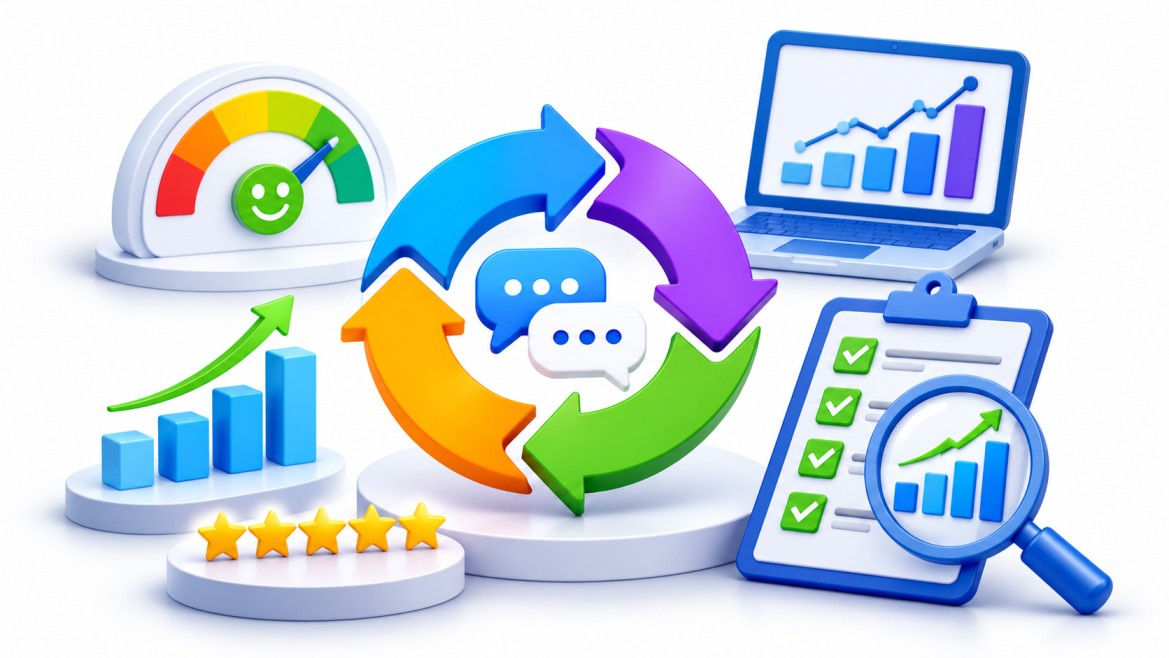
These metrics help businesses understand whether their feedback management activities are producing improvements.
| KPI | What it measures |
| CSAT | Customer satisfaction with a product or service |
| NPS | Customer likelihood of recommending a business |
| CES | Effort required to complete a customer interaction |
| Feedback response rate | Percentage of invited customers who respond |
| Complaint resolution time | Time taken to resolve customer complaints |
| Repeat complaint rate | Frequency of recurring customer issues |
| Review response rate | Percentage of relevant reviews receiving responses |
For example, if a company receives repeated complaints about customer support delays, it can introduce improved response procedures and monitor customer satisfaction over subsequent reporting periods.
If response times improve and customer feedback becomes more positive, this may indicate that the changes are working.
However, businesses should not rely on a single metric to evaluate customer experience. Combining numerical scores with written comments, operational data, and complaint records provides a more complete picture.
Creating an effective customer feedback loop is essential for businesses that want to improve customer satisfaction, strengthen brand reputation, and build lasting customer relationships.
Regardless of the industry, every customer interaction provides an opportunity to understand expectations, identify service gaps, and discover areas for improvement.
However, collecting customer reviews is only the first step. The real value comes from analysing feedback, responding to concerns, implementing changes, and continuously improving the customer experience.
A structured feedback management strategy helps businesses make informed decisions, understand customer expectations, and create more consistent experiences across different touchpoints.
This is where piHappiness can support your business.
With features such as multichannel survey distribution, customised surveys, real-time dashboards, analytical reports, NPS and CSAT software, and case management, PI Happiness helps organisations collect and understand customer feedback more effectively.
Whether you operate a small business, a growing enterprise, or a large organization, having a structured customer feedback process can help you make customer opinions an important part of your business improvement strategy.
Frequently Asked Questions
- What is a customer feedback loop?
A customer feedback loop is a continuous process of collecting customer opinions, analysing responses, addressing concerns, and implementing improvements. It helps businesses understand customer expectations and improve their products, services, and overall customer experiences.
- Why is a customer feedback loop important for businesses?
A customer feedback loop helps businesses identify service gaps, improve customer satisfaction, strengthen brand reputation, and make informed decisions. It also helps organisations understand recurring customer concerns and develop better products and services.
- How can businesses collect customer feedback?
Businesses can collect customer feedback through email surveys, SMS, QR codes, website forms, social media reviews, and in-person interactions. Customer feedback software such as PI Happiness can help organisations manage survey distribution and monitor customer responses.
- What are the five stages of a customer feedback loop?
The five main stages are:
- Collect customer feedback.
- Analyse customer responses.
- Take action on identified concerns.
- Respond to customers.
- Monitor improvements and repeat the process.
These stages help organisations turn customer opinions into continuous business improvements.
- What is the difference between CSAT and NPS?
CSAT measures customer satisfaction with a specific product, service, or interaction. NPS measures how likely customers are to recommend a business to others. Both metrics help organisations evaluate different aspects of customer experience.
- How can customer feedback improve online reputation?
Genuine customer feedback provides potential customers with insights into a business’s products, services, and customer support. Responding professionally to reviews and resolving genuine concerns can help strengthen customer trust and brand credibility.
- How frequently should businesses collect customer feedback?
Businesses should collect feedback at important customer touchpoints, such as after purchases, service interactions, product delivery, or customer support requests. The frequency should depend on the customer journey and the type of service being evaluated.
- How should businesses handle negative customer reviews?
Businesses should acknowledge negative reviews, respond politely, investigate the concern, and offer an appropriate resolution. They should avoid arguments, public disclosure of personal information, and unrealistic promises. Genuine customer concerns should be addressed through appropriate internal processes.
- Can customer feedback software help improve business performance?
Yes. Customer feedback software can help businesses organise survey responses, monitor satisfaction metrics, identify recurring issues, and understand customer expectations. These insights can support operational improvements and more informed business decisions.